

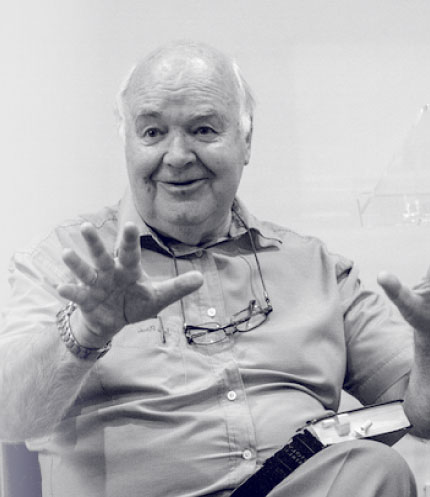
For over a little more than a decade I have been meeting with a men’s Bible study on Wednesdays at lunch. We have covered much scripture and many Christian writers. Recently we have begun reading John C. Lennox, Against The Flow- The Inspiration of Daniel in an Age of Relativism. Lennox is a mountain in the world of what I might call theological/exegetical/devotional Bible study. Retired professor of Mathematics, and I believe Physics, from Oxford University, Lennox brings all of the bullion of the hard sciences as he seeks to open the scriptures for others through the mutual pedagogies of scientific rationalism and scripturally inspired faith. I continually find his thought and reflection nothing but helpful and edifying.
Over the past few months I have said in any number of situations, from deeply pastoral to political and cultural, that I simply continue to find that the presence I call God has always been more or less an “inevitability” in my life. Within all the twists and turns that come with being called as a pastor/preacher, a husband, a father, and friend, with many losses, challenges, as well as successes and victories, I continue to simply find that God is an inevitability for which I do not have enough fencing to keep in a pasture of my own choosing; whether that pasture be circumscribed by tragic loss, or surprising ambition and success. For whatever reason, in the moment I might seek to “close the gate” on the meaning of life, our joint experience of living life, I strongly sense that I remain a visitor in someone else’s lands. Although I might become adept at running fence lines across the land that I deem “my own,” or “my life,” I still find this inevitable experience of being a visitor in someone else’s house – the One I call Christ and God.
Recently in Lennox’s book I read the quote that follows. I found it very compelling – this notion that the very voice that would like to convince us that all is relative, or all things are driven by a kind of materialistic determinism absent a divine intentionality, would also like for us to take their own observations as anything but such relativism. Essentially, how does the relativist give an account of their own existence? And why would one professing such a point expect us to do anything but take them at their word, and add their observations to the great heap of what must not be taken seriously? And if all utterance about the ultimate meaning of “the project” is relative, why take the trouble to make a comment at all?
I realize I may be straining gnats, and wondering about how many angels dance on the head of pin, but for some reason at this season in life, Lennox’s pithy answers seem to be messages of God’s grace. Blessings and Godspeed on your journey.
– Alston
I am aware, of course, that some will wish to question the fact that there is any overarching meaning in history. They regard the whole idea as an outmoded legacy of what they dub the “Judaeo-Christian way of thinking”. John Gray, Professor of the History of European Thought at the London School of Economics, puts it this way (2003, page 48):
If you believe that humans are animals, there can be no such thing as the history of humanity, only the lives of particular humans. If we speak of the history of the species at all, it is only to signify the unknowable sum of these lives. As with other animals, some lives are happy, some are wretched. None has a meaning that lies beyond itself. Looking for meaning in history is like looking for patterns in clouds. Nietzsche knew this, but he could not accept it. He was trapped in the chalk circle of Christian hopes.
I wonder how Gray knows this. I presume he would accept that his book, from which I have just quoted, is part of his life and history. If he is right in what he asserts, then his book can have no meaning beyond himself – and hence, surely, none for you or me. His theory of the meaninglessness of history fails to be valid for us, so he cannot know that your history or mine has no meaning. The circle in which he is trapped by his logical incoherence is made of sterner stuff than chalk. Like all who espouse such relativism, he falls into the error of making himself and his ideas an exception to the logical consequences of those ideas. His epistemology is incoherent.
Herbert Butterfield takes a very different view. Butterfield, Herbert, Christianity and History, London, G. Bell & Sons 1949; Collins: Fontana, 1957, 1964. (pages 10–11): Sir Herbert Butterfield FBA was an English historian and philosopher of history, who was Regius Professor of Modern History and Vice-Chancellor of the University of Cambridge:
The significance of the connection between religion and history became momentous in the days when the ancient Hebrews, though so small a people, found themselves between the competing empires of Egypt, then Assyria or Babylon, so that they became actors, and in a particularly tragic sense proved to be victims in the kind of history making that involves colossal struggles for power… Altogether we have here the greatest and most deliberate attempts ever made to wrestle with destiny and interpret history and discover meaning in the human drama; above all to grapple with the moral difficulties that history presents to the religious mind.
What this amounts to is the importance of realizing that the meaning of history lies outside history.

 The Carpenter's Nail