

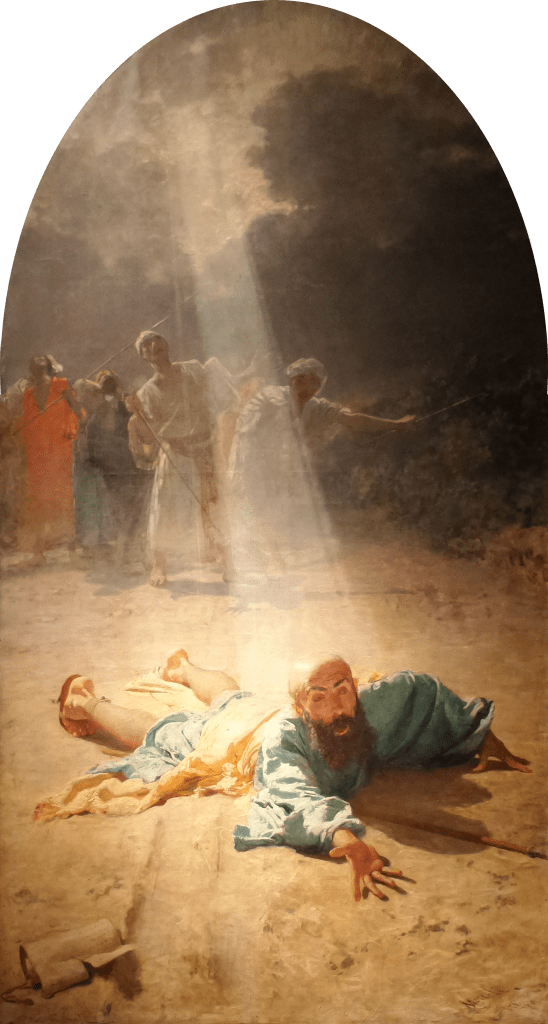
The reason Paul was ‘doing theology’ was not that he happened to have the kind of brain that delighted in playing with and rearranging large, complex abstract ideas. He was doing theology because the life of God’s people depended on it, depended on his doing it initially for them, then as soon as possible with them, and then on them being able to go on doing it for themselves. All Paul’s theology is thus pastoral theology, not in the sense of an unsystematic therapeutic model which concentrates on meeting the felt needs of the ‘client’, but in the sense that the shepherd needs to feed the flock with clean food and water, and keep a sharp eye out for wolves. {NT Wright}
{All of the quotes in this post are taken directly from The New Testament In Its World – NT Wright and Mike Bird, SPCK}
PAUL, PHILEMON, KOINO̅NIA, AND THE MESSIAH
Paul’s letter to Philemon might seem an odd choice for commencing a discussion of Paul’s theology, but as we will see it is a helpful place to begin. It showcases the control room behind Paul’s theology.
The probable background of the letter takes us to the town of Colossae, a day or two’s walk east from Ephesus. Philemon, who has become a Jesus-follower through Paul’s ministry (presumably in Ephesus itself), has a slave called Onesimus. Onesimus has absconded—a serious, possibly capital, crime—and has sought out Paul, in prison. We presume that the young man was hoping that Paul would appeal to Philemon on his behalf; there are hints in the letter that he had done something to make Philemon particularly angry, perhaps stealing from him as many absconding slaves did. However, as well as meeting Paul, Onesimus has also come to faith in Jesus, and Paul has come to see him as his own son, begotten through his gospel ministry right there in prison.
When we inspect the substance of Paul’s request to Philemon in Philemon 8–22, Paul’s request is straightforward and unambiguous. It comes to a head in verse 17: ‘So, anyway, if you reckon me a partner in your work, receive him as though he was me’ (NTE/KNT). The main thing Paul is asking for is that, when Onesimus returns home, Philemon will regard Onesimus as if he were Paul himself: ‘if you regard me as a partner [koinōnos], then accept him [proslabou auton] as if he were me.’ That will follow directly from Philemon being prepared to see Onesimus as a brother in Christ (v. 16). It will have the effect, at the very least, in his not condemning Onesimus to any of the usual punishments that might have been expected for a misbehaving slave. Paul, however, wants more than that. He wants Philemon to see Onesimus as a beloved brother. In the interest of partnership/fellowship (koinōnia), Philemon should receive (proslabanō) Onesimus as a member of the Messiah’s people. This is the central thrust of the letter—as it is, indeed, of much of Paul’s understanding of what it meant to belong to the Messiah and his family.
Paul’s letter to Philemon might seem an odd choice for commencing a discussion of Paul’s theology, but as we will see it is a helpful place to begin. It showcases the control room behind Paul’s theology.
The probable background of the letter takes us to the town of Colossae, a day or two’s walk east from Ephesus. Philemon, who has become a Jesus-follower through Paul’s ministry (presumably in Ephesus itself), has a slave called Onesimus. Onesimus has absconded—a serious, possibly capital, crime—and has sought out Paul, in prison. We presume that the young man was hoping that Paul would appeal to Philemon on his behalf; there are hints in the letter that he had done something to make Philemon particularly angry, perhaps stealing from him as many absconding slaves did. However, as well as meeting Paul, Onesimus has also come to faith in Jesus, and Paul has come to see him as his own son, begotten through his gospel ministry right there in prison.
When we inspect the substance of Paul’s request to Philemon in Philemon 8–22, Paul’s request is straightforward and unambiguous. It comes to a head in verse 17: ‘So, anyway, if you reckon me a partner in your work, receive him as though he was me’ (NTE/KNT). The main thing Paul is asking for is that, when Onesimus returns home, Philemon will regard Onesimus as if he were Paul himself: ‘if you regard me as a partner [koinōnos], then accept him [proslabou auton] as if he were me.’ That will follow directly from Philemon being prepared to see Onesimus as a brother in Christ (v. 16). It will have the effect, at the very least, in his not condemning Onesimus to any of the usual punishments that might have been expected for a misbehaving slave. Paul, however, wants more than that. He wants Philemon to see Onesimus as a beloved brother. In the interest of partnership/fellowship (koinōnia), Philemon should receive (proslabanō) Onesimus as a member of the Messiah’s people. This is the central thrust of the letter—as it is, indeed, of much of Paul’s understanding of what it meant to belong to the Messiah and his family.
It is interesting that Paul does not order Philemon to set Onesimus free. There are good reasons why that would not have been an obvious or even a beneficial move at the time. Within the social world of antiquity, freeing slaves without any idea of what would happen to them next would often mean casting them into destitution. If Paul had simply mounted his apostolic high horse and instructed Philemon to free the young man, Philemon might have responded angrily by giving Onesimus his freedom but declaring that he never wanted to set eyes on him again. That would have meant defeat for Paul—double defeat, indeed, failing to bring about the reconciliation of master and slave and causing a new rift between himself and Philemon. What was needed was not simply manumission but mutuality, not a recalcitrant release but a reconciled relationship. That is why Paul wrote this letter.
Strikingly, Paul does not command Philemon to do anything specifically. He appeals to him to think through the situation from the point of view of ‘being in the Messiah’, and to work out for himself what he must do. The prayer at the start of the letter (v. 6) encodes this request: Paul is praying that ‘your partnership [with us] in the faith’ (koinōnia tes pisteos sou) may have its full effect, to ‘realize’ (both in the sense of understanding and in the sense of ‘realizing in practice’) the Messiah-shaped unity for which God is at work in his people. Philemon must, in other words, think through and work out what this koinōnia means in practice, what it will mean that God is at work in him—and in Onesimus!—to will and to work for his good pleasure.
Paul is teaching Philemon how to think as a Messiah-shaped kingdom-person, that is, to allow the fact of the Messiah’s cross and resurrection to reshape his reflection not only on what he should do but also on the communitarian context within which he should do it. Paul calls on Philemon, in other words, to do theology—to learn, in this new situation, to think and then to act as a Messiah-person, to understand the world in a new way and live accordingly. That is what Paul wanted all Jesus-followers to do.
Jews in Paul’s world, and indeed in ours, do not normally ‘do theology’ in the way that Christians have done. That, to be sure, is part of the ‘newness’ of Paul’s Jesus-shaped viewpoint: it positively requires prayerful, biblically rooted reflection on God, the world, and ourselves. But when Jews ancient and modern do explain what they believe, it all comes down again and again to three things that Paul continued to take for granted, however much they were reshaped around Messiah and spirit. The three categories in question are monotheism, election, and eschatology: one God, one people of God, one future for God’s world.
THE PAULINE TRINITY: MONOTHEISM, ELECTION, AND ESCHATOLOGY
If there is one God (monotheism), and if this God, living and active in the world (creational and providential monotheism, as opposed, say, to pantheism), has chosen Israel as his covenant people in order thereby to take forward his purposes in the world (election), this must mean that this God intends a future purpose, not yet attained but guaranteed by creation and covenant (eschatology). One could put it more strongly, echoing many Jewish writers from the Psalms and the Prophets to writers of Paul’s own time: if there is one God, and if Israel is God’s people, something is surely wrong: how is the one God going to fulfil his promises to his people, and indeed to the world? Hence the threefold pattern: one God, one people of God, one future for God’s world.
RETHINKING GOD
There were various ‘monotheisms’ in the ancient world, just as there are today. ‘One God’ is not a self-evident or univocal idea. Stoicism was monotheistic, because it was pantheistic: if everything is divine, or if divinity lives within everything, then there is only one divinity. Even within the Jewish world, the conception of God proffered by the Alexandrian philosopher Philo works quite differently from the descriptions of God offered by the (equally monotheistic) Qumran sectarians. In our own time, the nominal Christian west tends to assume a kind of ‘moral therapeutic Deism’, radically different from the view of God espoused by the Wahhabi sect of Islam. Just as there are many ‘gods’ and many ‘lords’, so too are there many ‘monotheisms’. It is nevertheless clear that the monotheism reflected in the Pauline letters, itself umbilically linked to the monotheism expressed in the scriptures and the ‘one God’ language in Jewish second-Temple literature, could be characterized as creational and covenantal monotheism. The one God of Israel made the world and has remained in dynamic relationship with it; and this one God, in order to further his purposes within and for that world, has entered into covenant with Israel in particular.
In Jewish thought, therefore, God would one day not only put the world to rights but somehow deal retrospectively with the horror, violence, degradation, and decay which had so radically infected creation, not least human beings, including Israel. The wolf will in the end lie down with the lamb, and the earth shall be full of the glory of God as the waters cover the sea. Thus, monotheism, election, and eschatology are, at one level, all about the problem of evil. The question of how God is involved in the mess and shame of the world at the present time, and more particularly of how he will ultimately deal with it, often remains opaque. Paul believed that God’s answer to evil was revealed in the Messiah’s death, resurrection, and ascension, and that this answer was being worked out in practice by the divine spirit, not least in shaping and energizing his people to carry forward his purposes.
There are many places where Paul demonstrates a clear and obvious adherence to Jewish-style monotheism, without any particularly striking redefinition.9 He refers to the oneness of God as a natural baseline for his assertions in Romans 1 and 3, and Galatians 3. He praises the one God, the creator whom much of the world has spurned (Rom. 1). He expounds the resurrection as the ultimate act of new creation by the God who made creation in the first place (Rom. 4; Rom. 8; 1 Cor. 15). He declares, without a shadow of pagan or pantheistic divinizing of creation, that food is good, marriage and sex are good, the created order is good, and that humans ought to enjoy them as what they are—that is, as parts of God’s good creation—without worshipping them.
Paul remained, then, in principle a Jewish-style monotheist.
But he had also dramatically redrawn this monotheism around Jesus himself.10 Paul (and it seems others before and alongside him) arrived at this position by a mixture of experience and exegesis, but most of all, by the conviction that the prophetic promise of YHWH’s return, and the new exodus associated with it, had transpired in Jesus’ person and work. Whereas many scribes and seers pondered what the promises made in the scriptures about YHWH’s return to Zion would look like when they finally happened, Jesus’ followers believed that in him, and supremely in his death and resurrection, Israel’s God had now done what he had long promised. He had returned to be king. He had ‘visited’ his people and ‘redeemed’ them. He had come back to dwell in the midst of his people. Jesus had done—in his life, death, resurrection, and ascension—what God had said he and he alone would do. He had inaugurated God’s kingdom on earth as in heaven. This explains why Jesus’ first followers, like the apostle Paul, found themselves not only as it were permitted to use God-language for Jesus, but compelled to use Jesus-language for the one God. We can sum up this redefinition as Paul’s ‘christological monotheism’.
Perhaps the most famous passage where Paul redefines Israel’s ‘God’, placing Jesus in the middle of the picture, is Philippians 2.6–11. Most scholars recognize that this poem expresses a very early, very Jewish, and very ‘high’ christology, in which Paul identifies the human being Jesus with one who from all eternity was equal with Israel’s ‘Lord’ (kyrios), and who gave fresh expression to what that equality meant by incarnation, humiliating suffering, death, and exaltation. The ‘therefore’ of verse 9 is crucial: Jesus is now elevated to the position of supreme honour, sharing the glory that the one God will not share with another, because he has done what only the one God can do.
At the centre of his Jewish-style monotheism is a human being who lived, died, and rose in very recent memory. Jesus was not a new god added to a pantheon. He was and is the human being in whom YHWH, Israel’s one and only God, has acted within cosmic history, human history, and Israel’s history, to do for Israel, humanity, and the world what they could not do for themselves. In Paul’s mind, Jesus was to be seen as part of the identity of Israel’s God, and vice versa.
‘As the apostle Paul notes, God takes what humans intend to be the definitive act of disfigurement and dishonour and reclaims it as something uniquely revelatory. Capital punishment. Death. On a cross. The end of a life that reveals the meaning of life. In that case, the cross is the consummate act of divine irony. What the Romans believed to be the cessation of life and meaning, God claims as the marker that defines the possibilities of life for all of us, for all time. The cross, then, becomes the ultimate apocalypse: the revelation of God’s intention for humankind. Through struggle and even death, God reveals life.’
Brian Blount, Invasion of the Dead, xii.
The same is true in another well-known passage, 1 Corinthians 8.6. Here again the context is all-important. Paul is facing the question of how to live as a Christian within pagan society; more specifically, whether one may or may not eat meat that has been offered to idols. His opening comments on the matter, after an initial remark about knowledge and love, show where he is coming from: we Christians, he says, are Jewish-style monotheists, not pagan polytheists. We know that no idol has any real existence, and that there is ‘no God but one’.11 You could scarcely get clearer than that. Paul is well aware—he could hardly not be, after the places where he had lived and worked—that there were many so-called gods, and many so-called lords, out there on the streets, in temples, in family shrines. But the regular beliefs of pagan polytheism were, for him, decisively challenged by the Jewish claim about the one true God.
He was the God who had revealed himself to Israel’s ancestors not least at the time of the exodus, and he was worshipped and acknowledged supremely in the daily prayer, the Shema: Hear, O Israel, YHWH our God, YHWH is one—or, in the Septuagint, kyrios ho theos hēmōn, kyrios heis estin.
The deployment of kyrios-language for Jesus in these two texts, taken right out of Isaiah 45.23 and Deuteronomy 6.4, possesses epochal significance. A theological galaxy shifts when Paul writes like this. A small step for the language; a giant leap for the theology! Jesus is not a ‘second God’: that would abrogate monotheism entirely. He is not a semi-divine intermediate figure. He is the one in whom the identity of Israel’s God is revealed, so that one cannot now speak of this God without thinking of Jesus, or of Jesus without thinking of the one God, the creator, Israel’s God.
The death of Jesus is not, then, merely bolted on to the outside of Paul’s christology. It is the point where the whole thing is going, or, from another angle, the point where it all began. This is why, in the climactic passage Romans 3.21–26, it is the crucifixion of the Messiah that reveals the dikaiosynē theou, the faithfulness of God. The covenant God has been faithful to his promise; the creator has been faithful to his creation; the one God has revealed the justice which, like mountains, soars high above the multiple injustices of the world. The cross is the place where Paul sees God’s justice fully displayed; his christology, seen as the revision of Jewish-style monotheism, is the context within which we can best understand it.
In all this, across Galatians 4 and Romans 8, Paul is again working from within the framework of Jewish-style monotheism. He sees the spirit alongside the son as the agents of the one God, doing what Wisdom was to do, doing what Torah wanted to do but could not. This is why, to the puzzlement of so many Pauline readers down the years, Paul himself can speak in strongly positive terms about Torah (it really was God’s law, holy and just and good) while insisting that the purposes for which Torah had been given have now been fulfilled, so that Torah itself is no longer necessary in the new messianic family.
Once we start to see this pattern of the son and the spirit together redefining Jewish monotheism, we notice similar things all over the place. For instance, in 1 Corinthians 12.4–6, Paul declares, over against the chaos of pagan-style worship, that when the spirit of the living God is at work there must be genuine unity. But even here, where he wants to stress this unity against the wrong sort of diversity, he says it in three separate ways: there are varieties of gifts, but the same spirit; varieties of service, but the same lord; varieties of working, but it is the same God who accomplishes all in all. The unity in diversity which the church must exhibit in its worship is grounded in and modelled on that unity in diversity which Paul simply names, without further argument or discussion, as spirit, lord, and God.
Paul thus regularly spoke of the spirit in ways which indicate that he regarded the spirit, as he regarded the Messiah, as the glorious manifestation of YHWH himself. This conclusion is not dependent on one or two verbal echoes, but relies on the regular and repeated invocation of the various elements of the foundational exodus-narrative. The spirit is, it seems, the ultimate mode of YHWH’s personal and powerful presence with, and even in, his people. The christology of ‘divine identity’ is thus matched by the pneumatology of ‘divine identity’, in both cases focused in particular on the Jewish eschatology of the return of YHWH.
RETHINKING GOD’S PEOPLE
This brings us to Paul and God’s people, specifically his reworking of Israel’s election. When we refer to ‘election’ here, we are not using the technical sense of the word proper to the theological schemes of either John Calvin or Karl Barth. Rather ‘election’ here denotes God’s choice of Abraham’s family, the people historically known as ‘Israel’ and, in Paul’s day, in their smaller post-exilic form, as ‘the Jews’ or ‘the Judeans’ (hoi Ioudaioi). The word ‘election’, as applied to Israel, usually carries a further connotation: not simply the divine choice of this people, but more specifically the divine choice of this people for a particular purpose, to extend YHWH’s salvation to the ends of the earth.
The belief that Israel was the chosen people of the creator God is everywhere apparent in the Old Testament and the second-Temple literature, and indeed in all that we know of the praxis and symbolic world of both ancient Israel and first-century Judaism. The great stories that Israel told year by year were designed to celebrate and reinforce this status, often in the teeth of contrary evidence such as oppression by pagan nations and even corruption within Israel itself. We hardly need rehearse the stories of the patriarchs, the exodus and conquest, the monarchy and its problems, the prophetic tradition of calling Israel back to its God, or the Psalms which simultaneously celebrated Israel’s special status and lamented its failure to live up to its calling. Throughout it all was a basic belief: the one creator God had called Israel to be his special people, and, as part of that call, had given Israel the land to live in and the Torah to live by.
When the people of Israel asked why they had been chosen, the answer came back, from Deuteronomy in particular, that it was purely a matter of God’s love. But when Israel asked what purpose God had in mind in doing this, the ultimate answer came back in a variety of ways which were variously embraced, lost sight of, distorted, and re-emphasized down the years. For the writer of Genesis, the call of Abraham was God’s answer to the problem of Adam, which had become the problem of Babel. Human rebellion had led to arrogance, pride, and the fracturing of human life. The canonical Old Testament frames the entire story of God’s people as the divine answer to the problem of evil: somehow, through this people, God will deal with the problem that has infected his good creation in general and his image-bearing creatures in particular. Israel is to be God’s royal nation of holy priests, chosen out of the world but also for the sake of the world. Israel is to be the light of the world: the nations will see in Israel what it means to be truly human, and hence who the true God is. For this purpose, Israel is given Torah, so that the word of the Lord can go out from Zion to the nations. What Adam was in Eden, Israel was to be in Canaan: God’s priest, king, and servant before and on behalf of creation. This is why the sectarians at Qumran looked forward to a day when the ‘sons of light’ would recapture ‘the glory of Adam’. It is why Philo believed that the whole point of the exodus was to create a people who would deliver the human race from evil, and the Jewish Sibyl regarded Israel as ‘guides of life’ to the peoples of the earth. We could sum up Israel’s election this way: ‘There is no God but YHWH, and Israel is his prophet.’
The problem was that things had not turned out this way. Israel was not ruling like Adam, but was condemned in Adam, exiled like Adam, and corrupted like the rest of Adam’s fallen progeny. Nobody prior to Paul seems to have put it quite like this, but when faced with the disaster of AD 70 the writer of 4 Ezra, observing the circumstances of Israel’s humiliating subjugation to, and desolation by, Rome, complained to God that the world had been made for Israel, but that instead the gentile beasts had trampled down the chosen people. This problem could only have been caused by Adam himself. This illustrates how election was closely bound up with eschatology: because Israel was the one people of the one creator God, this God would soon act to vindicate Israel by liberating it from its enemies with a view to rescuing the nations and renewing all of creation.
Different writers drew the conclusion in different ways. Some documents, like the Psalms of Solomon, envisaged a fulfilment of Psalm 2, with Israel under its Messiah smashing the gentiles to pieces with a rod of iron. Others, not least some of the rabbis in the Hillelite tradition, envisaged a redemption which, once it had happened to Israel, would then spread to the nations as well. Both of these represent natural developments of the doctrine of election itself, the point being that because Israel was the chosen people of the one creator God, when God did for Israel what God was going to do for Israel—however that was conceived—then the gentiles would be brought into the picture, whether in judgment or blessing or (somehow) both. One way or another, God’s purpose in election, to root evil out of the world and to do so through Israel, would be fulfilled. God’s transformation of Israel would mean the transformation of the world.
When Paul reappropriates this kind of train of thought, we see two things operating simultaneously. First, there is a strong affirmation of Israel’s election: never for a moment does he doubt that God called Israel and would be faithful to that election. Second, Paul insists that the purposes for which the covenant God had called Israel had been accomplished through Jesus precisely as Israel’s representative Messiah, and were now being implemented through his people. Here the Jewish view of election is brought into fresh focus, rethought, reimagined, and reworked around Jesus himself, specifically, his death, resurrection, and enthronement.
If God can call an undeserving and obstinate nation to be his people, as (according to Israel’s own scriptures) he had done for Abraham’s family, there is nothing to stop him from doing the same again among the gentiles. This, Paul believes, is just what God has done in the Messiah: God has revealed his glorious mercy to those ‘whom he . . . called, not only from the Jews but also from the Gentiles’. This is why Paul can claim that gentiles are part of God’s ‘elect’ or ‘chosen’ people, why they can legitimately claim to be the ‘circumcision, we who serve God by his Spirit’, or ‘fellow citizens with God’s people and also members of his household’. It is why Messiah-believers from Jews and gentiles alike can together be identified as ‘the Israel of God’. This new people, called from among Jews, Greeks, barbarians, and anyone else you can think of, is no longer defined ethnically, but messianically and thus eschatologically. If Jesus is Israel’s Messiah (and early Christianity makes no sense whatever without that belief), then any and all who belong to Jesus are the inheritors of the Abrahamic promises. They are part of God’s new creation, participating in the Messiah where distinctions of gender, tribe, ethnicity, and social status cease to be badges of privilege and status. (Such distinctions are not erased entirely; men are still men for Paul, women are still women, just as Jews are still Jews and gentiles are still gentiles.) What matters is grace, not race; what marks out this people is not Jewish customs or Roman patrimony but faith working through love, the obedience of faith, and ‘keeping the commandments of God’. (Paul must have known that this last phrase was ironic, since for him circumcision, a central command for Jews up to that point, had become irrelevant.) Where faith in Jesus as lord is professed and where the spirit performs his life-giving works, these are the signs of God’s renewed people.
From all this it should be clear that Paul not only regarded Jesus as Israel’s Messiah, the one in whom the promises of the Psalms and Isaiah were fulfilled. He also saw this messianic identity as incorporative: God had done for Jesus what many, Paul included, had expected him to do for Israel as a whole, and this seems to have generated a strong and determinative sense for Paul that the ‘incorporative’ themes in the scriptures (the king representing his people, and so forth) had come true in Jesus. As Israel’s Messiah, he had drawn the identity and vocation of God’s chosen people onto himself. He was Israel in person. Two things need to be stressed here.
First, the calling and destiny of Israel are brought to fulfilment in the Messiah’s death and resurrection. The Messiah has done that for which Israel was chosen in the first place, to bring redemption and renewal and life from the throes of death, to lead peoples from exile to homecoming. Jesus’ death, described densely in passages like Romans 3.21–26; 4.25; 8.3; 2 Corinthians 5.21; and Galatians 3.13–14, has provided the means for Israel and the nations to be delivered from evil. Jesus the Messiah has been obedient where Adam was disobedient; Jesus the Messiah has been faithful where Israel failed. His obedience and faithfulness are manifested decisively on the cross, in taking upon himself the condemnation of Adam and all humanity, together with the covenantal curses consequent upon Israel’s disobedience. Faced with large-scale human idolatry and sin, God sent him forth as a hilas tērion, ‘mercy seat’, the place where the living God met with his people. Faced with Israel’s failure to keep the holy law (Rom. 7), God provided his own son to die peri hamartias (‘as a sin offering’) (Rom. 8.3). And in the resurrection, God raised Jesus, declaring him thereby to be Messiah, ‘son of God in power’, the firstborn of the new creation. Jesus was vindicated; he was, in that sense, justified, declared to be ‘in the right’. He had been faithful to God’s commission, and that faithfulness becomes the badge, the only identifying mark in fact, for all those who, grasped by the gospel, come to believe in the God who raised him from the dead. This is ‘justification by faith’; not that ‘faith’ is something we ‘do’ in order to impress God, but that the faith that Jesus is lord and that God raised him from the dead is the one and only sure sign of membership in the people of the faithful Messiah.
The Messiah, therefore, has done for the world what Israel was called to do. He has done in Israel’s place what Israel was called to do but could not, namely to act on behalf of the whole world as the Suffering Servant, the Passover Lamb, and the Righteous One. All those who believe the gospel message of his death and resurrection are now themselves accorded the status of dikaios: righteous, forgiven, within the covenant. God’s faithfulness is therefore fully and finally unveiled in the cross; God’s justice is powerfully and poignantly revealed in the resurrection. God has put the world right in Jesus. He will complete that work through the spirit.
Second, and closely following, is the assertion that believers, by faith and through the agency of the spirit, are incorporated into the Messiah. Paul sees Jesus as the one who has been established as Messiah through his resurrection, drawing Israel’s history to its strange but long-awaited resolution, fulfilling the promises made to Abraham, inheriting the nations of the world, winning the battle against all the powers of evil, and constituting in himself the promise-receiving people. The purpose behind this is so that ‘in him’ everyone might receive those promises, precisely not in themselves but insofar as, being ‘in him’, they are incorporated into the True Jew, the one in whom Israel’s vocation has been fulfilled. This incorporative meaning is on clear display in passages like Philippians 3.2–11. It is ‘in the Messiah’, in the Israel-in-person, that Paul finds the identity and resurrection hope he had formerly hoped to find in his identity as a zealous and Torah-observant Jew. The status of being ‘justified’, declared to be ‘in the right’ and a member of the people of the one God, is recognized by one and only one mark, namely, the faith of the believer which identifies him or her as part of the family of the ‘faithful’ Messiah. One could make similar points from Paul’s remarks on baptism in Romans 6. In baptism, one is literally immersed into the story of the Messiah’s death and resurrection. The real-life event of baptism takes the real-life person and etches into his or her personal history the death and resurrection of the Messiah, anticipating the bodily reality of the individual’s own future death and ultimate resurrection. What is true of the Messiah now becomes true of the baptized believer.
It is therefore under the heading of ‘election’, in the sense used here, that we can fill in what was said a moment ago about Paul’s famous doctrine of ‘justification’. Given the covenantal architecture of Israel’s faith, and the sectarian context of first-century Judaism, those who reflected on the state and fate of the Jewish people were faced with two premises and a question: (1) Israel’s God will bring about his new world, raising his people from the dead to share in it; (2) clearly this has not yet happened, and clearly not all Jews, with variegated levels of fidelity to the Jewish way of life, are going to share in this new world; therefore, (3) how can one tell in the present time who will be among the righteous and resurrected? That is the question to which various first-century doctrines of ‘justification’ were the answer. Saul of Tarsus, the zealous Pharisee, would have answered this question by stipulating that zealous Torah-observance marked out in advance those who were ‘righteous’, covenant members, in God’s sight.37 They were the ones about whom one could say in the present time, on the basis of their Torah-observance, that they were already recognizable as those who would be vindicated when God finally acted in power to judge and save. Paul the apostle, however, said that the people marked out in the present as the covenant people who would be saved on the last day were those who had Messiah-faith, whose belief in the God who raised Jesus marked them out as Messiah-people, members of the renewed covenant. How could this be?
Paul believed that a day was to come when God would hold the whole world to account. This judgment would include both condemnation and vindication, for both Jews and pagans. What is more, this would be the fulfilment of the Abrahamic covenant, in which God promised to bless the whole world; the Pentateuch, whose opening narratives display this promise, closes with the urge to Israel to choose life rather than death. Paul saw all this as having come true in the Messiah: he had forged the way through death into new life beyond, fulfilling in himself the Deuteronomic narrative of exile and restoration and thereby enabling the promises given to Abraham to reach their goal. In other words, Paul believed that what God had said he would do at the end of history, he had done in the middle of history: this ‘day’ had come in the Messiah’s death and resurrection. The verdict of condemnation had been meted out upon the Messiah; the verdict of vindication, righteousness, had been enacted in his resurrection from the dead. Thus, when Paul says that believers have been ‘justified by faith’, he is saying that they have received in advance the divine verdict of acquittal. They now stand in the proper covenant relationship with God, anticipating their resurrection in the eschaton. They already have a rightful place within God’s holy people, anticipating the final revelation of their status within the covenant. This is the declaration of a ‘righteous’ status, not the description of a righteous character. The Messiah has been faithful, and vindicated as such, and ‘in him’ the baptized believers are declared to be God’s people. In other words, the Messiah’s death constitutes the past event that enables justification to take place, and the Messiah’s present incorporative life is the context within which it makes sense for the one God to make the same declaration over people now that he made over the Messiah himself in the resurrection. The verdict pronounced over the Messiah’s faithfulness is now pronounced over the faith of those who are ‘in him’.
Paul suggests that what makes one ‘Jewish’, a member of the covenant people, is not physical circumcision, but experiencing a circumcision of the heart. This will be a fresh work of the spirit, nothing to do with the ‘written code’. This is what he claims has happened to his gentile converts. Their new heart-obedience to the law’s requirements meant that ‘circumcision’, that is, covenant membership, could be imputed to them, even though the males among them were not physically circumcised.39
Paul explains the point at length in 2 Corinthians 3, as part of his description of his own apostleship. Importantly, the contrast at the heart of this chapter is not between the Torah itself and the gospel, not between Moses and Jesus, but between those who heard Moses and those who hear and believe the gospel. Torah was given, says Paul, to people with hard hearts and darkened minds. As a result, they were not able to look at the glory of God revealed on Moses’ face. But where the spirit of the Lord is, the apostle and the members of his congregation can look one another in the face, can stare at the glory revealed there, and can by this means be transformed from one degree of glory to another. They are therefore the beneficiaries of, the members of, God’s renewed covenant; the people who are being renewed by the spirit. In fact, he elsewhere declares to the Corinthians that they are the Temple of the living God, where God dwells by his spirit as he dwelt in the pillar of cloud and fire in the wilderness tabernacle, or in the smoky cloud in Solomon’s Temple.40 This indwelling by the spirit is also the resource and the imperative which calls God’s people towards holiness and the renewal of their minds.
REWORKING GOD’S FUTURE
If there is one God, and if this God is the God of Israel, then—granted the present state of the world, and of Israel—this God must act in the future to put things to rights. If he doesn’t, then creation and covenant, monotheism and election, are themselves called into question. Eschatology, the question of God’s future—both the future that God has in store for the world and, in a sense, God’s own future—is up for grabs. For Paul, God’s intended purposes for the world, and for his people, had been unveiled embryonically in the present time in Jesus’ resurrection. God, he concluded, had had a two-stage plan to put the world to rights: the sending of the Messiah and the giving of the spirit as the first stage (the ‘now’), and, in the future, the return of the Messiah and transformation by the spirit (the ‘not yet’). That is how Paul has reworked the ancient Jewish eschatology. All the elements are there, but seen in a new light because of the gospel events, backed up by a re-reading of Israel’s scriptures. And, if the original hope included the longing for the dark powers of the pagan world to be overthrown at last, Paul believed that this, too, had been accomplished in principle through Jesus’ death and would be completed at his return.
The other elements of the ancient Jewish hope included the coming of YHWH, the end of exile/a new exodus, agricultural fecundity, building a new Temple, the arrival of a new Davidic king, the return of the dispersed tribes to Judea, peace, the bestowal of God’s spirit, gentile submission or conversion, resurrection of the dead, and so forth. What is more, a survey of the wide-ranging evidence for Jewish beliefs in the period (from the Maccabeans and their Pharisaic descendants; John the Baptist; Qumran; Philo; Judean apocalyptic seers; the later rabbis) indicates that these scriptural images for the future could be taken in various ways, fitting in with various different assessments of Israel’s problem and various specific aspirations for Israel’s future.
When first-century Jews thought of God’s future, of a coming ‘end’ of whatever sort, they saw this not simply as a bolt from the blue, descending into an otherwise undifferentiated and irrelevant historical sequence. They saw it precisely as the climax, the denouement, of a story, a plot which had been steadily unfolding both in the mind of God and on the ground in the middle east—even if that denouement, when it came, would come as a shock, from an unexpected angle. Paul knew this story and retold it in a shocking way. The end had already begun in Jesus the Messiah; the end remained to be consummated by Jesus and the spirit. In the Messiah, God’s own future had burst into the present. By incorporation in the Messiah, God’s people could experience its blessings in the present, and be marked out to enjoy all its fullness in the future.
As we have seen already, Paul believed that what the people of Israel had hoped God would do for them at the end of history, God had already begun to do in the present through the Messiah. That is why Paul can say that the ‘end’ had already arrived in Jesus; because he was the pre-promised messianic deliverer who had come to Israel and revealed God’s saving righteousness (Rom. 1.3–4; 3.21–26; 9.5; 15.8–9). His death ended Israel’s exilic curse (Gal. 3.13); he died as a sacrifice for sins (Rom. 3.25; 8.3; 1 Cor. 5.6); he transferred believers from the dominion of darkness to the divine reign (Rom. 5.20–21; Col. 1.13–14); he won the victory over evil (Rom. 8.37; Gal. 1.4; 1 Cor. 15.57; Col. 2.15); his resurrection was the beginning of the general resurrection of the dead (Rom. 1.4; 8.39; 1 Cor. 15.23; Col. 1.18); his heavenly enthronement was the installation of a human being as co-regent of the universe (Rom. 8.34; 14.9; 1 Cor. 15.20–28; Col. 3.1; Eph. 1.20; 2.6). All these are aspects of Israel’s hope which Paul saw as fulfilled in the Messiah.
Similarly, the spirit (1 Cor. 2.12; 2 Cor. 11.4) accomplishes further elements of the ancient hope. The spirit takes believers from slavery to sonship (Rom. 8.15; Gal. 4.6–8), turning them into personalized temples of God’s presence (1 Cor. 6.19). The spirit is a downpayment of the good things God still has in store for believers (2 Cor. 1.22; 5.5; Eph. 1.14). For Paul, that which Jewish eschatology looked for in the future, the overthrow of the enslaving evil powers and the establishment of YHWH’s reign, had truly been inaugurated in and through the events of Jesus’ death, resurrection, and enthronement, and the giving of the spirit.
At the same time, there was yet another component of God’s unveiling of salvation still to come. Believers still struggled against sin and fleshly desires; death appeared to continue unabated, a grim tyrant; creation was still groaning; Caesar remained secure on his throne (well, relatively so); idolatry and wickedness continued to prosper; demonic power, even when checked as for a while in Ephesus, was growing like a pugnacious weed. Even Israel, for the most part, had not only rejected the Messiah, but was positively hostile to the messengers of covenant renewal. The Messiah’s reign in heaven did not seem to be having much effect on earth. Granted, Paul of all people was used to seeing human lives and human communities transformed by the gospel and making a considerable difference where they were, but that seemed just as likely to stir up hostility as admiration. He therefore looked ahead to a future ‘day’ when sin and evil would be utterly vanquished, believers completely rescued, God’s verdict issued in cross and resurrection finally enacted in the resurrection of the bodies of believers themselves, and God’s will completely done on earth as in heaven.
Four elements stand out in which Paul redraws the still-future Jewish eschatology around the Messiah.
First, there is the ‘day of the lord’ or ‘day of the Messiah’, a redefinition of the older scriptural ‘day of YHWH’. The idea of a coming ‘day’ when the creator of the world would act in judgment and mercy was an important theme in the Prophets. Paul believed that the accomplishment of Jesus as Messiah, and the gift of the spirit, meant that in one sense the new day had already dawned: ‘the day of salvation is here.’ But ‘the day’ could be divided up into the present ‘day’—the ongoing ‘now’ of the gospel—in which promises were truly fulfilled, not just anticipated; and the future ‘day’ in which the work would be complete and the creator would be ‘all in all’. In places like 1 Corinthians 15.20–28, in which the distinction between these two days is made, ‘the end’ in verse 24 is described in climactic terms: ‘Then the end will come, when he hands over the kingdom to God the Father after he has destroyed all dominion, authority and power.’ Importantly this ‘day’ is particularly related to the scriptural promises of the ‘return of YHWH to Zion’. When Paul spoke about the future day of Jesus, he was speaking of the time when, in the person of his son, Israel’s God would come back once and for all, to call the whole world to account and to establish his reign of justice, mercy, and peace.
Second, there is Jesus’ return, his royal ‘presence’ (parousia) or ‘appearing’ (epiph aneia). Unlike most of Paul’s technical terms, parousia has no biblical overtones. It comes, rather, from the classical world, where its simple and basic meaning is ‘presence’ as opposed to ‘absence’. It is often used in association with a royal visitation, as when Caesar might visit a city, or with the manifestation of a divinity to observers, as when Zeus might appear (in disguise, as often as not) in the Greek countryside.
By using this language Paul is hinting simultaneously that Jesus will be like a king returning from abroad to reclaim his rightful possession and that he will come to embody and effect God’s reign on earth. That is what stands behind Pauline statements like: ‘May he strengthen your hearts so that you will be blameless and holy in the presence of our God and Father when our Lord Jesus comes with all his holy ones.’ Jesus’ parousia combines the prophetic hopes for YHWH’s return to Zion and the arrival of the royal deliverer. This is the focal point of the final hope for God to rescue his people, not by whisking them up to heaven as in the Platonic view of immortal souls being rescued from hopeless bodies, but by transforming the present creation, including believers still alive at the time, and by raising his people from the dead. As he tells the Philippians, ‘We eagerly await a Saviour from there, the Lord Jesus Christ, who, by the power that enables him to bring everything under his control, will transform our lowly bodies so that they will be like his glorious body.’
Third, belonging closely with the coming ‘day’ of Jesus’ parousia is the judgment. Jesus will bring God’s wise justice and order to bear on the whole creation. He will be the one, declares Paul, through whom God will judge the secrets of all hearts. All will ‘appear before the judgment seat of Christ, so that each of us may receive what is due us for the things done while in the body, whether good or bad’. Given what Paul believes about Jesus’ resurrection and the confirmation of his status as Messiah, it makes sense—good, first-century Jewish sense—to think that Jesus himself would be the one through whom the one God would exercise the judgment that many Jews believed was coming upon the world. The Messiah represented Israel; Israel represented Adam (Abraham’s family having been called to be the means of putting Adam’s problem to rights); and it was Adam’s task to care for creation and to bring it into order. The coming messianic judgment was therefore both the fulfilment of the age-old Jewish hope, the answer to so many prayers in the Psalms and elsewhere, and also the final statement, like that of Daniel to Nebuchadnezzar, that the Lord Most High rules over the kingdoms of mortals. For Paul, there is another twist. Those who belong to the Messiah will themselves share in the work of judging the world, including judging angels. Paul introduces this with a disarming ‘don’t you know?’, but we may suspect that the Corinthians to whom he writes that would be as surprised as we are.46 His view here depends on a reworking of the Jewish picture of coming judgment, based on Daniel 7 as well as elsewhere, with Jesus both as the embodiment of YHWH and as the inclusive representative of God’s people. The task of judgment in Daniel is given to ‘the people of the saints of the Most High’, and though Paul like other early Christians saw Jesus as occupying this role uniquely, the fluidity of thought between Messiah and people meant that the role could be, and in this case was, easily extended to all those ‘in the Messiah’.
Fourth, as part of the ‘end’, and indeed setting the context for everything else, Paul highlights the promised renewal of all creation through the Messiah. For God’s creation to be healed and pacified, it is necessary that the present world, in its state of corruption and decay, should be set free from that ‘slavery’. As before, Paul is thinking in terms of the exodus, here at a cosmic level. Creation will be free to be itself, once God’s children are ‘glorified’, set in proper authority over the world, and able to give it and guarantee it that freedom. This cosmic vision is expressed in Romans 8 through the image of the birth-pangs through which the new world will be born. In 1 Corinthians 15 the same hope is expressed in terms of the great victory over all the forces of evil, up to and including death itself. This cosmic future, we note, is already operative in the Messiah’s people themselves, since the new creation is already manifested among those in whom the spirit dwells, a guarantee for the glory and reign still to come. The underlying premise is that ‘if the Spirit of him who raised Jesus from the dead is living in you, he who raised Christ from the dead will also give life to your mortal bodies because of his Spirit who lives in you’.
This is a clue to the old question as to why a good God would create a world that was other than himself. Would that not necessarily mean something less than perfect? Would that not then compromise God’s ultimate goodness? No: the creator has made a world that is other than himself, out of sheer generous love. The creation has the capacity, perhaps supremely in human beings, to respond to God’s creative power and love in worship and praise. And creation as a whole, as the ancient prophets had seen, has the capacity to be filled with his glory and knowledge, with his breath, his life, his spirit. When that happens, this will not be anything other than ‘the hope of the glory of God’, the ancient hope of Israel. That hope, translated and transformed through the Messiah and the spirit, will be fulfilled in and for the entire creation. This will be the ultimate messianic victory: the divine love, poured out in the death of the divine son, will overcome all obstacles and enemies. Indeed, it will enable his people to overcome them, and, as Paul says, ‘more than overcome’ them.
It should now be clear that Paul’s vision of the future is, once again, the radical redrawing of the Jewish expectation. The hope that has been fulfilled has also thereby been reshaped. The ‘day of YHWH’ in the Old Testament has been transformed into ‘the day of the lord [Jesus]’ in the New. The return of YHWH is split between the messianic fulfilment of the promises to Israel and the lord’s return in glory with his holy ones. The present judgment passed on sin in the Messiah’s crucifixion points on to the ultimate judgment that will be passed on the last day. The prophetic hope for prosperity and agricultural fecundity is taken up and intensified so that the whole creation will be set free from its present slavery to decay. Paul seldom says so explicitly, but this is the ancient Jewish hope for ‘the kingdom of God’, brought into sharp focus through the gospel. This, the ultimate vision of Jewish hope, has been fulfilled in Messiah and spirit, and will be fulfilled in the same way.
THE PAULINE LEGACY
Paul’s theological vision—which he says was rooted in his own literal vision of Jesus—was for the churches of Jews and gentiles to be united together in a common worship of God through Jesus the Messiah and in fellowship with the holy spirit. Paul’s career, at least in its mature form, was centred on the unexpected ‘revelation’ of the kingdom of God through Jesus’ death and resurrection, through which he believed that God had renewed the covenant with Israel, throwing it open (as always intended and promised) to all the nations, and launching the new creation from the midst of the old one. The proof that this had happened was the establishment of Messiah-believing communities, made up of Jews and gentiles, a united and holy people of God, reconciled through the Messiah’s cross, renewed by the spirit, embodying in their prayers and practices the life of the age to come. This required, of course, a complete recasting of the Jewish worldview, redrawn around Messiah and spirit, radically reorganizing the theological fixtures of God, Torah, Messiah, covenant, and kingdom. It meant a new way of thinking and living: a new type of human being.
To put it simply, Paul believed that Israel’s God had, in Jesus’ death and resurrection, unveiled his new creation; that Jesus’ followers were called to be part of that new creation; and that meant thinking in a new way. The content of that thought mattered vitally, but learning to think in the new way mattered above all. For Paul, this vocation and activity (which we might call ‘Christian theology’) was load-bearing: without it, the church would not be, could not be, what it was called to be. Without the constant prayerful and scriptural struggle to understand, in every generation, who God really is, what he’s done in Jesus, and what it means for his people, the church easily slips away from its vocation to be united and holy and thereby to be a sign to the world of God’s ultimate future. Paul left behind him a network of suffering, struggling, but growing churches. He left a small collection of explosive writings. But his main legacy may well turn out to be the task he articulated, modelled, and urged on his followers: the task of doing Christian theology.

 The Carpenter's Nail