

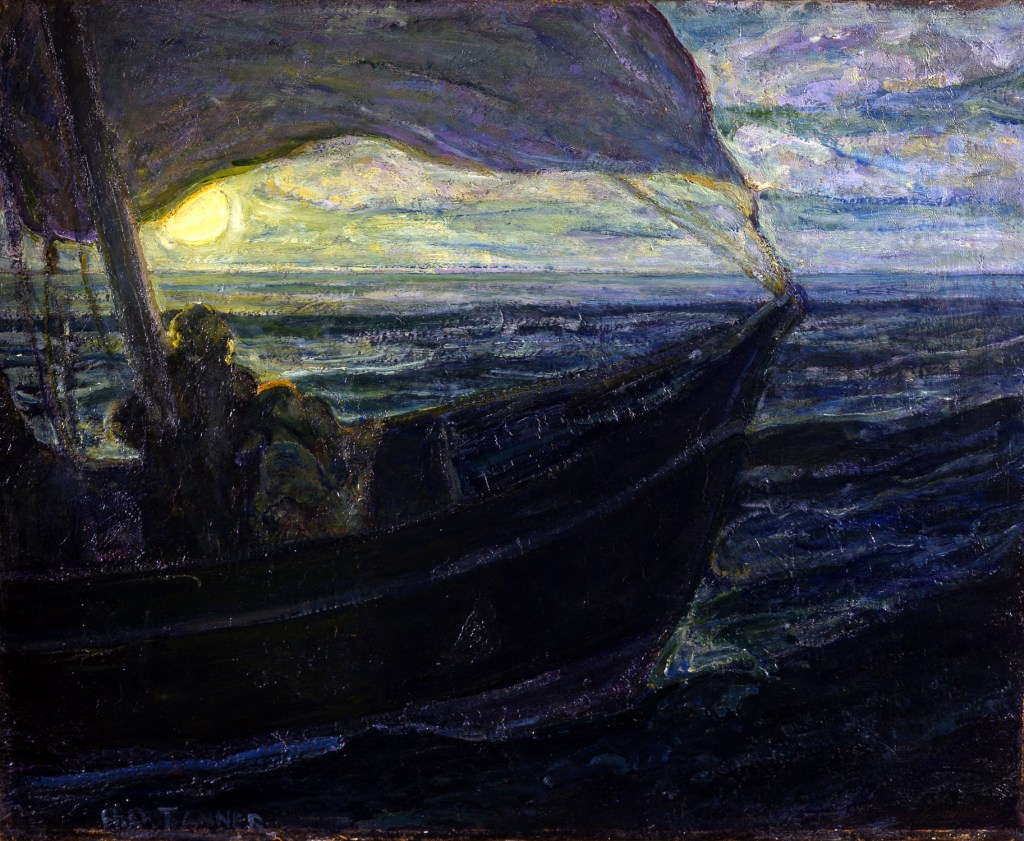
The text contained in the post are direct quotes from “The New Testament In It’s World,” by NT Wright and Mike Bird, Zondervan, SPCK.
The Gospels were written to invite readers to enter a worldview. In this worldview, there is one God, the creator of the world, who is at work in his world through his chosen people, Israel. With the coming of Israel’s Messiah, that long work has reached a moment which is both a climax and a new start. Israel’s purpose is accomplished; Israel’s long bondage to the pagan world is ended—and all through Jesus. The gospels’ major focus on the death and resurrection of Jesus is not to be explained as the reading back of ‘later Christian theology’ into a story whose ‘biographical’ intent should have kept such reference to a minimum. The evangelists were not downplaying the significance of the life and mission, the aims and achievements, of the one who was thus crucified and raised. They were emphasizing these latter events as the proper and necessary climax of precisely the type of story that was being told.
Jesus’ kingdom-work was completed on the cross, and publicly vindicated in the resurrection; Calvary and Easter mean what they mean in the light of the kingdom-work that went before. Thus the evangelists’ theological and pastoral program has in no way diminished (as some have supposed) their intent to write about Jesus of Nazareth. It actually demands that they do just that.
THE GOSPEL ACCORDING TO MARK
INTRODUCTION
The gospel of Mark is a densely packed, fast-paced, action-filled narrative about Jesus of Nazareth, his life and teachings, his divine identity and human vulnerability, God’s kingdom breaking in through him, and the Judean and Roman opposition mounted against him. It is a story of prophecy and power, resistance and betrayal. The story’s climax includes Jesus’ violent death by crucifixion and an abrupt and enigmatic ending pointing to his resurrection.
It suffices here to say that Mark’s gospel marries the early church’s gospel-preaching with the Jesus-tradition, placing them into a literary genre best described, from one viewpoint at least, as a hellenistic biography akin to other biographies of figures like Socrates and Julius Caesar. Mark’s gospel is also, however, linked so closely to the story of Israel (which, in scripture, contains other ‘biographies’ like those of Abraham, Joseph, or Moses) that it is best to see it as an essay in a mixed genre that includes what a first-century audience would have recognized as ‘biography’ but goes well beyond it.
Mark, in short, like the other gospels in their different ways (and, we must suppose, like most early Christians), saw the story of Jesus as the culmination of Israel’s great story. In addition, Mark, like the others, is writing for the church, intending that what he says will be formative for its mission and life. As the Psalms and prophets regularly insist, when God does for Israel what he has promised to do for Israel, the wider world will be brought in to the drama.
While Mark’s gospel is a God-story, and a very Jewish one at that, it demands to be seen in the (admittedly contested) category of ‘apocalyptic’. What we mean by this is that Mark highlights the notion of a secret to be penetrated, of a mystery to be explored and grasped by faith.
Apocalyptic writing did many things, but one central function, using a complex blend of myth and metaphor, was to tell the story of Israel’s history, to bring it into the present, and to point forward to the moment when the forces of (this-worldly) evil would be routed and the (this-worldly) liberation of Israel would finally take place.
Viewed in this light, Mark tells the story of Jesus as the unveiled story of Israel. At key moments in the story—the baptism, the transfiguration, the confession of Peter at Caesarea Philippi, Caiaphas’s question at the trial, and the centurion’s words at the foot of the cross—the veil is lifted, eyes are opened (at least the eyes of Mark’s readers), and, like Elisha’s servant, we see the horses and chariots of fire round about the prophet. Thus Mark’s whole telling of the story of Jesus is designed to function as an apocalypse
The reader is constantly invited by the gospel as a whole to do what the disciples are invited to do in the parable-chapter of Mark 4: to discover the inner secret behind the strange outer story.
This secret was shocking. This was not how Jesus’ contemporaries had imagined the prophecies being fulfilled. It was not how Mark’s contemporaries expected that a world ruler would emerge.
The coming of the kingdom does not mean the great vindication of Jerusalem, the glorification of the Temple, the real return from exile in terms of Judea living in peace and the gentile forces sent packing. It means, rather, the desolation of Jerusalem, the destruction of the Temple, and the vindication of Jesus and his people. Jerusalem and its hierarchy—the wealthy Sadducean high priesthood, the brooding Herod—have now taken on the roles of Babylon, Edom, and Antiochus Epiphanes in this stark retelling of their story. They are the city whose fall spells the vindication of the true people of Israel’s God. The prophecies of rescue from the tyrant have come true in and for Jesus himself, and in and for his people.
In the end, as Richard Hays comments, the gospel of Mark is ‘a mysterious story enveloped in apocalyptic urgency, a story that focuses relentlessly on the cross and ends on a note of hushed, enigmatic hope’. It is a story about how, in the life and death of Jesus, God has become king.
CONTEXTUAL AND CRITICAL MATTERS
Origins of Mark’s gospel
The gospel of Mark is strictly anonymous. The author remains unidentified. The only point where some have detected a self-reference is perhaps ironic: a young man in the garden leaves his linen garment and runs away naked. The title Kata Markon (‘According to Mark’) was probably added later when tradition ascribed the book to Mark. Internally, we can infer that the gospel of Mark was written by a Greek-speaking Jewish Christian, deeply familiar with the Old Testament, and clear in his mind that Jesus was indeed ‘son of God’. He was perhaps, as very early tradition suggests, basing his work on the preaching of Peter himself; Peter is the first and last disciple mentioned, and many of the stories can easily be seen as reminiscences from Peter himself. Some have detected a theological affinity with Pauline thought, given the emphasis on the cross, redemption, and the gentiles, though this may simply mean that the author was a standard, mainline early Christian. Externally, the early church associated the gospel of Mark with John Mark, a missionary colleague of Paul and Barnabas, who later became Peter’s ‘interpreter’ in Rome. Certainty is impossible, but John Mark is probably the best candidate, not least because his name, as a younger and less well-known early Christian, would not naturally occur to second-century Christians when seeking to name the book. No alternative figure has ever warranted consideration. As to what we know about John Mark, Richard Bauckham gives a good summary:
John Mark, a member of a Cypriot Jewish family settled in Jerusalem and member of the early Jerusalem church, was then in Antioch, accompanied his cousin Barnabas and Paul on their missionary journey as far as Pamphylia, later accompanied Barnabas to Cyprus, and is finally heard of in Rome . . . where 1 Peter also places him. – Bauckham, 1998a, 35; see too Dunn 2015, 50.
Date
When it comes to a date for Mark, assuming (see below) that Matthew and Luke used Mark sometime in the late 70s or 80s, most scholars place the date of Mark’s composition around AD 65–75. That is rendered all the more plausible by the focus on the destruction of the Temple in Mark 13, where Jesus’ prophecy against the Temple is recalled in dramatic fashion probably because it is either an imminent possibility or else a recent memory for the audiences.
Place of composition
So where was Mark’s gospel written? Some have speculated on Galilee or Alexandria as the right place; but the two primary options have been Rome and Syria.
Rome has been the most popular, given the association of Mark with Peter and Rome (1 Pet. 5.13).13 Many also appeal to the Latinisms in the text, to the notes which explain that the Greek lepta is the equivalent to a Roman quadrans (Mk. 12.42) and that the aulē (‘courtyard’) equates to the praetorium (‘military headquarters’) during Jesus’ trial (Mk. 15.16).14 Others see proof of a Roman environment from the anti-Roman posture of Mark, particularly given the parallel language between the Markan story of Jesus and imperial propaganda for the empire and the emperor . . .
However, the problems with Rome are as follows: (1) many scholars regard 1 Peter as a pseudonymous writing, casting doubt on the connection between Peter and Mark that generated, in the second century, a link which would lend credence to Mark’s gospel; (2) the Latinisms could be taken from the military and economic spheres common in any city with significant Roman influence (such as Corinth, Philippi, Pisidian Antioch or Ephesus); (3) an anti-Rome disposition was possible anywhere where Roman power and culture was resented, and need not point to the city itself; and (4) persecution and harassment of Christians in the first century was not limited to Rome.
Others contend that Mark was written in the vicinity of Galilee, Syria, or the Trans-Jordan, perhaps even the Decapolis. The context for understanding Mark would then not be the Neronian persecutions in Rome in the 60s, but the Jewish revolt against Rome (AD 66–70) and its aftermath, when church members fled Judea. The warnings about false messiahs and false prophets (Mk. 13.22) would certainly fit Josephus’s description of Judea before and during the revolt. However, while one can imagine a Jewish Christian surviving the Jewish revolt and writing this gospel to encourage fellow-believers in Syria, the Trans-Jordan, and the Decapolis, our sources tell us very little about the churches there at this time. In fact, discerning any provenance in Mark’s gospel is notoriously difficult: Mark resonates with Christians wherever they need encouraging in discipleship under duress. That is no doubt one reason why Mark’s gospel circulated as widely, and quickly, as it did.
PURPOSE
Far more probable is that Mark’s gospel is an apology for a crucified Messiah and a polemic against the imperial power of Rome.
First, the gospel of Mark spells out that Jesus is the royal son of God, the Messiah, in whom God’s kingship is being mysteriously revealed through his kingdom-announcement, his healings, and his exorcisms (overthrowing the dark enslaving powers). But, in contrast to many expectations at the time, Jesus’ messianic vocation and inauguration of the kingdom were focused on his suffering and crucifixion. That is where Mark’s Jesus holds together Isaiah’s ‘Suffering Servant’ and the mysterious ‘one like a son of man’ in Daniel, as the hinge on which God’s kingdom-plan will turn. Mark’s portrait of Jesus is not that of a Galilean prophet who unfortunately got mixed up with powers too strong for him. Rather, Jesus embraced crucifixion as the calling through which Israel’s Messiah would redeem and rescue his people. Jesus claimed to speak for God over and against the Pharisees, scribes, high priests, and even the Temple itself; his crucifixion was not an accident, but his own chosen means, on the basis of his strange scripture-shaped vocation, to complete his work of kingdom-inauguration.
Second, the gospel of Mark arguably has counter-imperial connotations. The language of ‘gospel’, ‘lord’, and ‘kingdom of God’ presents Jesus as the figure who ushers in a new world-order that will rival, and potentially replace, the Roman empire. Mark’s crucifixion scene portrays Jesus’ death as a mock-triumph, the anti-type to a Roman victory parade (such as the one Titus celebrated in AD 71 when he entered Rome with captives and booty from the overthrow of Jerusalem). The moment Jesus dies, Mark reports that at the scene, ‘when the centurion, who stood there in front of Jesus, saw how he died, he said, “Surely this man was the Son of God!” ’ In deliberate dramatic irony, a Roman centurion addresses Jesus with an honorific designation in regular use for Caesar himself!
- Prologue (1.1–15)
Mark’s gospel, as we have it, opens with ‘The beginning of the gospel about Jesus the Messiah’ (1.1).30 The word ‘gospel’ (euangelion) was in use in connection with celebrations of the Roman emperor and his achievements. But the term also goes back to Isaiah 40 and 52, where the echoes are of the ‘good news’ of the end of exile, the ‘new exodus’, and the return of YHWH himself to rescue his people and to reign over them, and the world, as king (see ‘Portals and parallels: ancient uses of gospel’). These two ultimately belong together. If the scriptural model means what it says, this ‘good news’ will involve the God of Israel becoming Lord of all the nations—as is also the case in Daniel 7, a passage of great importance for Mark. His portrayal of John the Baptist, the ‘voice in the wilderness’ preparing the way for the coming ‘Lord’ about whom Isaiah spoke, sets up the reader to understand the developing scene in scriptural, theological, and also polemically political terms (1.2–3). Jesus is then baptized by John as an act of solidarity with Israel in this moment of ‘new exodus’. The spirit descends on him, and the voice from heaven draws together Psalm 2.7 and Isaiah 42.1. Jesus is anointed for his royal role as the ‘servant’ who will simultaneously embody Israel and Israel’s rescuing God (1.9–11).
- Galilean ministry (1.16—8.21)
Jesus’ public work in Galilee, as described by Mark, is a whirlwind of healings, exorcisms, teaching, and confrontations with local leaders. Jesus calls two sets of brothers to join him as ‘fishers of men’ (1.16–20 KJV). He astounds the crowds with his unmediated authority, healing a man with an unclean spirit on the sabbath (1.21–28). He heals Simon’s mother-in-law, then various others (1.29–34). After retreating to pray, he and his followers take their message on the road throughout Galilee (1.35–39). He heals a man with a virulent skin-disease, who celebrates wildly despite Jesus’ injunctions to silence (1.40–45). Across Mark 2.1—3.6 we find miracle stories that provoke increasingly volatile confrontations with local cultural leaders, perhaps because in apparently deliberately flouting the sabbath commandment Jesus was implicitly declaring that he was inaugurating the ‘age to come’ (towards which every sabbath was seen as a distant signpost). This implicit claim is reinforced by his claim to forgive sins; is he usurping God’s prerogative (2.1–12)? He calls a tax-collector and sits down to celebrate the kingdom with him and other ‘sinners’, again causing offence for those who cannot imagine that this is what the kingdom will look like. Jesus, however, has come like a doctor to heal the sick (2.13–17). The same puzzle is apparent in the controversy about fasting: the bridegroom is here, so the party cannot stop! What Jesus does is a new thing, a joyous thing, and though a time for mourning will follow, the present is for celebration (2.18–22). A further sabbath controversy (Jesus’ disciples plucking grain) is answered with the royal example of David, pointing to the ‘son of man’ as lord of the sabbath (2.23–28). In the final confrontation story, Jesus enters a synagogue and heals a man with a shrivelled hand on the sabbath, shaming the Pharisees in the process, which is why the Pharisees conspire with the Herodians—not their natural allies—to kill Jesus (3.1–6). All this work of ‘sowing’ the kingdom prepares us for the major discourse in which Mark collects several parables about the kingdom of God (4.1–34). These include the parables of the sower, lamp, bushel basket, growing seed, and mustard seed. In line with prophecy, God is again ‘sowing’ Israel, restoring its fortunes after exile, but this will not work out the way people expect. The kingdom is a mystery: Mark 4.1–20 has, in itself, the sequence of an ‘apocalyptic’ vision, with a strange story followed by questions about God’s kingdom and, in answer, a step-by-step explanation of the story. The kingdom may indeed have small, inauspicious beginnings, but like a mustard seed it will grow into something great. Signs of the inbreaking rule—and presence!—of Israel’s God now intensify. Jesus and the disciples are caught in a furious squall on the Sea of Galilee in their small boat (4.35–41). The disciples wake Jesus up, and he calms the storm with a word. When the disciples ask, ‘Who then is this?’, Mark’s understanding is clear. As Richard Hays puts it, ‘For any reader versed in Israel’s Scripture, there can be only one possible answer: it is the Lord God of Israel who has the power to command wind and sea and to subdue the chaotic forces of nature.’33 The sense of divine power confronting the forces of chaos continues with the healing, in gentile territory, of a man possessed by a ‘legion’ of demons. Again Jesus commands silence, and is disobeyed (Mk. 5.1–20). This leads to a further Markan ‘sandwich’: the resuscitation of a young girl and the healing of a hemorrhaging woman (5.21–43). The kingdom means renewal and new life, replacing fear with faith. This does not, however, happen in Jesus’ home town of Nazareth (6.1–6a). The scene changes in Mark 7.1—8.10, bringing into question the relationship between gentiles and Israel. The complex discussion about the food laws and purity indicates an apparent clash between Torah, as laid down by Moses, and the Pharisaic halakhah regulations which appeared to undermine it. The developed purity rules (in this case, handwashing) are hiding the deeper issue: defilement comes from the heart, not from food. Some might read Mark’s comment in 7.19b (‘In saying this, Jesus declared all foods clean’) as an aside meant for gentile readers; others might see it as indicating a new dispensation where, as with Paul, Jew and gentile have entered a new world, sharing a new purity. One can say at least that the Mosaic Torah should always trump the Pharisaic halakhah. Back in the Decapolis, Jesus heals a deaf and mute man: another gentile healed on gentile soil (7.31–37). Then, still in gentile territory, Mark records another feeding miracle, perhaps this time indicating that there is enough ‘bread’ for Jews and gentiles alike (8.1–10). This leads to another clash with the Pharisees, who (despite all that Jesus has done) demand a ‘sign’ (8.11–21). Jesus seems to regard this request as being itself a sign, to him, that ‘this generation’ of his contemporaries was determined not to heed his message. On that basis he warns his followers against the Pharisees and Herod.
3. The revelation of the Messiah in Caesarea Philippi (8.22—9.1)
Arriving in Bethsaida, Jesus heals a blind man, unusually taking two attempts: at first, the man sees people but they look like trees; then he sees clearly (8.22–26). This odd little scene, unique to Mark, illustrates what happens next, when Jesus and his disciples head north to Caesarea Philippi and he asks them who people say he is. This is the crucial turning-point in Mark’s story. The popular rumour has it that Jesus is a prophet (like the man seeing people dimly as though they were trees), but Peter declares, ‘You are the Messiah’ (seeing clearly). Once again Jesus commands silence. Then, to his disciples’ shock and dismay, he tells them that he must now go to his death. Peter resists this, but Jesus insists. Calling the crowd, he declares that all those who want to follow him must likewise take up their cross.
- Jesus, discipleship, and the way to the cross (9.2—10.52)
- As though to confirm the story’s new direction, Jesus is transfigured in dazzling light (along with Elijah and Moses) before Peter, James, and John on a mountain (9.2–8). A voice comes from heaven, reminding us of the voice at the baptism: ‘This is my Son, whom I love. Listen to him!’ (9.7) To the puzzled question about Elijah coming before the Messiah, Jesus hints that Elijah had already been and gone: a cryptic reference to John the Baptist (9.9–13). Coming back down the mountainside, Jesus heals a possessed boy, eliciting a desperate faith from the father (9.14–29). He repeats the prediction of his own suffering (9.30–32). This leads to further teaching on discipleship and the true nature of greatness, to a rebuke when the disciples try to stop someone else casting out demons in Jesus’ name, and to warnings about the cost and challenge of following him (9.33–50). Then, with the scene changing to the region of Judea where John had been working, Jesus faces the Pharisees’ question about divorce.
Attention then focuses on Jesus’ conversation with a rich young ruler, who wants to know how to be sure of inheriting the ‘age to come’ (10.17–31). He claims to be Torah-observant, but Jesus wants more: he must sell all, give to the poor, and follow Jesus. Following Jesus, in other words, trumps even Torah. The incident encapsulates Jesus’ teaching about wealth and poverty, but also signals the radical change and challenge of the kingdom. This sets the context for Jesus’ third prediction of his Passion (10.32–34) and for James and John, still missing the point, to request positions of power in his coming reign. Mark knows what it will mean to be at Jesus’ right and left at his enthronement (see 15.27). The kingdom involves a total redefinition of power itself, and Jesus will embody that in his redemptive death (10.35–45).
Jesus in Jerusalem (11.1—12.44)
Jesus enters Jerusalem in royal fashion, on a commandeered colt, alluding to Zechariah 9.9 but also reminiscent of the Maccabean victory two hundred years earlier (11.1–7). The crowd, echoing Psalm 118.25–26, hopes for a new Davidic kingdom; but Jesus looks around the Temple area and then returns to Bethany, outside the city (11.8–11). We then have the most dramatic ‘Markan sandwich’, as Jesus curses an unripe fig tree, pronounces judgment on the Temple, and then finds the fig tree withered away (11.12–25). The Temple has become a haunt of bandits: Jesus was known to promise a new temple (14.58), while the current Temple and its ruling elite will meet destruction when the son of man is vindicated (13.5–37). This prediction will be crucial at Jesus’ later hearing (14.55–59).
Jesus then goes on the offensive with the parable of the wicked tenants, an echo of Isaiah’s prophetic warning (5.1–7) about Israel’s coming judgment (11.1–12). Citing Psalm 118.22–23 proves the point: the rejected ‘stone’ and the rejected ‘son’ are one and the same (in Hebrew ‘stone’ is eben and ‘son’ is ben). Further exchanges follow, first on the question of tribute to Caesar, then on resurrection (12.13–27). Kingdom-talk, and rebellious actions in the Temple, would raise the question of loyalty to Rome and the question of a new world being born: Jesus offers devastating answers on both points. To the standard question ‘Which is the greatest command in Torah?’, Jesus quotes the Shema (Dt. 6.4–5): God is one, and Israel must love God wholeheartedly. He adds a second commandment, from Leviticus 19.18: love your neighbour (12.28–34). But if Jesus thus appears as a loyal Jew, Mark indicates a redefinition from within: David’s ‘son’ is also—according to scripture!—David’s ‘Lord’ (Mk. 12.35–37). Psalm 110, perhaps the most important scriptural text for early Christians, redefines who the Messiah is, and with that who God himself really is. This exalted view of God and the Messiah contrasts with the shabby self-glorifying of the scribes (12.38–40); and this in turn contrasts with the widow who gives to the Temple-treasury all that she has (Mk. 12.41–44).
- The Olivet Discourse (13.1–37)
Jesus’ prophetic denunciation of the Temple reaches a crescendo in the much-misunderstood Olivet Discourse (Mark 13). The chapter is not about the end of the world, except in the important sense that Israel viewed the Temple as the linchpin that held heaven and earth together. ‘End-of-world’ language was thus appropriate for the forthcoming destruction of the Temple, and that language would have been so understood by both Jesus’ hearers and Mark’s readers.
- The whole speech, starting in 13.2, is dominated by the question of when the Temple will be destroyed, not when Jesus will return. (The return of Jesus is clearly taught elsewhere in the New Testament, but not here.)
- Apocalyptic language is regularly code for socio-political events invested with theological meaning. When those current events involve the Temple, this is only natural. When Mark has Jesus refer to the ‘son of man coming in the clouds’ and sending ‘his angels to gather his elect’, this is classic apocalyptic language for Jesus’ coming in triumph to God and for the worldwide mission of his disciples.
- Mark again associates the fig tree with the Temple’s fate, only now as a simile: these signs are like the leaves which indicate that summer is almost here. In fact, as in 9.1, ‘this generation will not pass away until all these things have happened’. Neither Mark nor any of his early readers worried that this might be unfulfilled (for example by the apparent ‘delay’ of the ‘second coming’). The Temple was indeed destroyed; Jesus was indeed vindicated in resurrection, ascension, and the worldwide mission.
The emphasis throughout is not on speculative eschatology, but on faithful perseverance (13.33–37).

 The Carpenter's Nail