


All of the information in this post is taken directly from “The New Testament In Its World,” Zondervan Press, Authors NT Wright and Mike Bird.
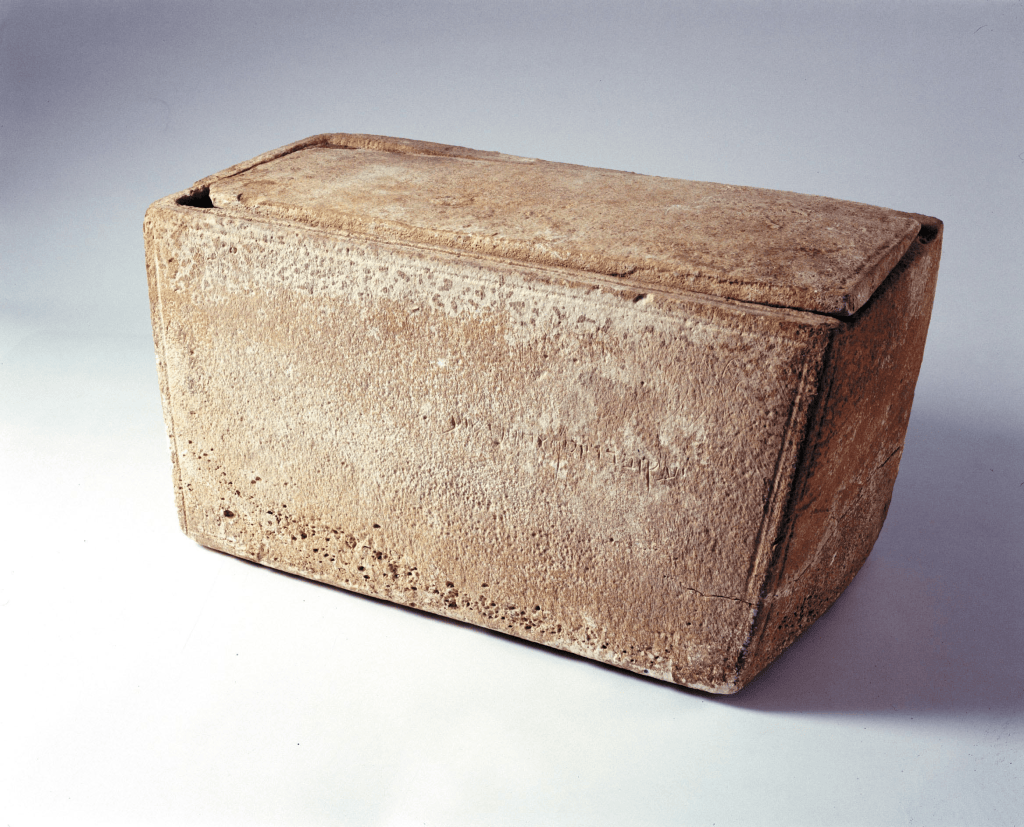
James and Jude are first mentioned as Jesus’ brothers when members of the synagogue in Nazareth disparaged Jesus as a local upstart trying to make a name for himself. Jesus’ mother and brothers initially had grave misgivings about his public ministry and even tried to seize him. Yet Jesus, after his resurrection, appeared specifically to James. He soon (particularly after Peter had disappeared on his travels) became the leading figure in the Jerusalem church, right until his martyrdom in AD 62 when he was stoned to death at the behest of the high priest during an interregnum between Roman governors. James was venerated in Christian memory as the first bishop of Jerusalem, a martyr, the brother of the lord. He was acclaimed by both proto-orthodox and gnostic circles as ‘James the Just’.
To begin with, if James is an epistle of straw, then the Sermon on the Mount is a sermon of straw, since James echoes much of Jesus’ teaching in the sermon. The paraenetic sections are far from commonplace. They are, in fact, christologically shaped exhortations derived principally from Jesus-traditions. The author is also ‘kerygmatic’, rooted in the proclamation of the good news, insisting that God ‘chose to give us birth through the word of truth, that we might be a kind of firstfruits of all he created’. He urges readers to accept the ‘implanted word that has the power to save your souls’. The references to the ‘Lord’s coming’, to the ‘Judge [who] is standing at the door’, and to the ‘name of the Lord’ invoked for anointing the sick could all be indicating Israel’s God, but they work even better as implied references to Jesus. In addition, the letter refers to ‘elders of the church [ekklēsia]’. James is not christocentric after the manner of the gospels, Paul’s letters, and Hebrews. Neither, for that matter, is 2 John or 3 John. But the letter of James is demonstrably Christian, serving as a moral map to sketch out the way of wisdom for the church.
The letter of James reminds us that what we now call ‘Judaism’ and ‘Christianity’ are not two polarized ends of a socio-religious spectrum. They never were. Even in the first century Jews who believed that Jesus was Messiah, and Jews who did not, constituted overlapping social groups with obvious claims to a common religious heritage. ‘Indeed,’ Matt Jackson-McCabe argues, ‘one might now say that the Letter of James is Jewish precisely because of, not in spite of, its veneration of Jesus.’
The short letter of ‘Judah’ or ‘Jude’ is attributed to the ‘brother of James’ (Jude 1), so, by implication, the brother or half-brother of Jesus as well. Jude warns against false teachers who have surreptitiously entered the audience’s assembly. He urges the readers to work hard to defend the faith as originally given (Jude 3–4). He is trying to persuade his readers not to be influenced by the intruders’ teaching and example, but rather to commit themselves to a model of faith and praxis that will bring them into line with the original apostolic teaching and pattern of discipleship. He therefore denounces the character, motivation, and practices of the intruders. Once that is done, and the warnings have been duly noted, one should always return to the basic Christian activity, which is the glad celebration and praise of the God who has saved us through Jesus the Messiah (Jude 24–25).
The letter of Jude—which has been much neglected in Protestantism—is an important witness to the reception of Jewish traditions in the early church and a significant source for Christian theology in the last third of the first century (though dating a document like this is inevitably difficult). It shows the struggle the churches faced with hellenistic culture, the emergence of a recognizable ‘faith’, the propensity for intra-church sectarianism, and modes of piety and devotion, as well as attesting to a vibrant tradition of scriptural interpretation.
The origins of James
There were several people called James (that is, Jacob) in the early church; but the predominant view of church history has been to identify the author of the ‘letter of James’ as the lord’s actual brother. Many scholars reject Jacobean authorship of this letter, preferring instead to see it as late, even from the second century, and pseudepigraphical.
The letter of James shows a striking affinity with some Jewish writings of the second-Temple period. In its genre and contents it resembles 2 Baruch 78—87. Its stress on the perseverance of Job is echoed, not in the book of Job itself, but in the Testament of Job. James’s account of the ‘binding of Isaac’ is similar to that in Jubilees. James replicates Palestinian sources by stressing how Elijah prayed that it would not rain for three and a half years—something not mentioned in 1 Kings.35 All this puts James much closer to the world of first-century Palestinian Judaism than to Christian writings of the second century.
When it comes to the passage about justification by faith or works, which some have seen as a response to a distortion of Pauline teaching, we might comment that this is exactly what one might expect from a mediating figure like James who affirmed Paul’s gospel (Gal. 2.9–10), who accepted gentile believers without male circumcision but asked them to respect Jewish scruples by avoiding idolatry and immorality (Ac. 15.13–21), and who warned Paul that he needed to repudiate rumours that he encouraged Jews to abandon Torah (Ac. 21.20–25). Viewed in this way, it is fair to say that ‘James puts us in touch with first-generation Christianity’.
Genre and purpose of James
James shows many similarities to the kind of greco-roman ethical discourse we find in Epictetus. But it also has some analogies to the ‘wisdom’ tradition we see in Ben-Sirach, and it has points of contact, too, with Jewish sapiential works such as the Sentences of the Syriac Menander and Pseudo-Phocylides. However, in terms of genre, James is best generalized as a paraenetic encyclical letter, offering exhortations on life and conduct. More precisely, it is a Diaspora letter, like those written from Judean leaders to Jews living outside of Palestine, to instruct on matters of cultic observance, to communicate halakhic decisions, and to assure God’s people of divine deliverance. The epistle of James, then, was written to urge Jewish Christians outside Palestine, perhaps in Syria and Asia Minor in particular, to maintain and keep the highest standards of Jewish moral teaching and to demonstrate that following Jesus embodied the righteousness and wisdom of God. This would enable them to offer a powerful witness to their fellow Diaspora Jews.
The origins of Jude
The epistle of Jude is a letter of exhortation, partly urging its readers to hold to a common faith, but also warning about certain libertine or antinomian intruders who have entered into their assembly.42 Jude’s epistle is a Jewish Christian writing, saturated with citations and allusions to Jewish literature (both scriptural and not). It shows signs of what is sometimes called an ‘apocalyptic’ worldview, slippery though that term is. It is ‘sectarian’ in the sense of trying to preserve the doctrinal homogeneity and ethical integrity of the group to whom it is addressed as they face intruders.
The letter is attributed in the opening verse to ‘Jude [Greek Ioudas],43 a slave of Jesus Christ, a brother of James’. This ‘Jude’ (or ‘Judas’) is explicitly identified as the brother of James, most likely the lord’s brother, making Jude, too, part of Jesus’ family. The language of the letter, as with James, is quite good Greek; again, some might say it was too good for a rural Galilean, but we should not underestimate the hellenistic penetration of Galilee or the Greek facility of the early Christians. The author appears to know the Jewish scriptures in a form closer to the Hebrew than to the Septuagint, but this simply means that, like many at the time, the author shows signs of a genuinely bilingual Greek–Aramaic Jewish world. In addition, although Jude was among the contested writings of the New Testament canon because of its use of apocryphal sources like 1 Enoch, nobody in the early centuries questioned Jude’s actual authorship of the letter, a matter on which it is hard to pronounce since, apart from this letter itself, we know next to nothing about the historical Jude. The letter could be pseudepigraphical, but it could just as well be authentic. Certainty (as on many matters of ancient history) is impossible, but there is nothing in the letter which rules out the ascription of authorship to a brother of Jesus named Jude.
Opponents in Jude
The intruders whom Jude vilifies (in the harshest rhetoric he can muster!) have been variously identified. Some have seen them as followers of Paul (who might be suspected of moral deviance); others, as early gnostic Christians. Jude labels them as ‘ungodly people’ who ‘pervert’ divine grace into a licence for debauchery, and ‘deny Jesus Christ’. They are denounced for a sexual immorality that imitates Sodom and Gomorrah. The intruders probably laid claim to pneumatic inspiration, leading the writer to dismiss them as ‘dreamers’. They denied or slandered angels
and celestial powers. Jude describes their teaching as fruitless and futile. They contaminate those around them, perhaps by turning community ‘love feasts’ into Greek-style symposia or bawdy drinking-parties. They are rapacious and greedy, self-absorbed and self-serving, taking advantage of people. They are driven by evil and godless ‘desires’, quick to complain and criticize. No wonder their presence is divisive. Jude assesses them as ‘worldly’ and says that they ‘do not have the Spirit’. He lines them up beside various scriptural models of rebellion, immorality, and wickedness, including Cain, the angels who rebelled against God and departed from heaven, the Israelites who grumbled in the wilderness, the citizens of Sodom and Gomorrah, Balaam, and Korah. Jude does not mince his words about what awaits such people. They are destined, he says, for ‘destruction’, ‘condemnation’, ‘eternal fire’, ‘the blackest darkness’, and ‘judgment’. His image of these intruders is of persons who have transgressed boundaries, indicating not only arrogance but a denial of Christ and God, and serious moral deviance.
Are such remarks merely rhetorical tropes about wickedness in general, or is Jude writing about specific persons, and if so who? If the intruders are real, they may be a cross between the itinerant pseudo-apostles and false prophets mentioned in the Didache and the antinomian Carpocratians described by Clement of Alexandria:
Now concerning the apostles and prophets, deal with them as follows in accordance with the rule of the gospel. Let every apostle who comes to you be welcomed as if he were the Lord. But he is not to stay for more than one day, unless there is need, in which case, he may stay another. But if he stays three days, he is a false prophet. And when the apostle leaves, he is to take nothing except bread until he finds his next night’s lodging. But if he asks for money, he is a false prophet.62
These are the doctrines of our noble Carpocratians. They say that these people and some other zealots for the same vicious practices gather for dinner (I could never call their congregation a Christian love-feast), men and women together, and after they have stuffed themselves (‘The Cyprian goddess is there when you are full,’ they say), they knock over the lamps, put out the light that would expose their fornicating ‘righteousness,’ and couple as they will with any woman they fancy. So in this love-feast they practice commonality. Then by daylight they demand any woman they want in obedience—it would be wrong to say the Law of God—to the law of Carpocrates. I guess this sort of legislation Carpocrates must have established for the copulation of dogs, pigs, and goats.63
We simply do not know who these wicked persons are, but can well understand Jude’s disgust at antinomian behaviour.
Date and purpose of Jude
The epistle of Jude was incorporated almost in its entirety into 2 Peter 2. We shall presently see that 2 Peter may well date to the second century. Clement of Alexandria wrote a commentary on Jude (c. AD 180–200), and Jude is mentioned in the Muratorian canon (c. AD 180). Before then it is hard to be sure whether anyone refers to it, though it is possible that there are echoes of Jude’s doxology in the Martyrdom of Polycarp.64
Those who argue for a late date for Jude do so on several grounds. First, the idea of a ‘common faith’ as a fixed body of belief is thought to belong to a time in the second century when statements of faith become formalized. However, ‘the faith’, as a type of formulae or set of confessional claims, is known even prior to AD 70 in Paul’s undisputed letters. Second, the mention of ‘what the apostles of our Lord Jesus Christ foretold’ is also said to place the epistle in at least the late first century or thereafter. That might be the case, but what is being referred to is the apostles’ missionary activity, not the apostles themselves. Paul himself could refer to apostles in the plural, and discuss their respective activities; and the author of Hebrews could urge his readers to remember their leaders who taught them the word of God.
In sum, Jude is a letter of exhortation, written to a specific audience in a particular situation. The questions of where and to whom it was written remain a matter of educated guesses. We could imagine an appropriate context, with Jude writing to Jewish Christian assemblies, any time from the 50s to 90s AD, in Syro-Palestine, the Trans-Jordan, or perhaps Egypt. The letter is an energetic exposition of one facet of early Christian teaching.
THE ARGUMENT OF JAMES
- Opening greeting (1.1)
The author describes himself as ‘James’. He does not expressly identify himself as the brother of the lord, but instead as ‘a servant of God and of the Lord Jesus Christ’. This omission is no false modesty. The church was not dynastically organized. A familial relationship with Jesus would not in itself constitute grounds for authority.
The addressees are ‘the twelve tribes scattered among the nations’, which could mean that the letter was written to Diaspora Jews. That might indicate that we should see the letter as a commendation of Jewish Christianity to non-Jesus-believing Jews; that in turn might explain why explicitly Christian traits appear subtle or subdued. James’s purpose could be to clarify a Christian Judaism to non-Christ-believing Jews while simultaneously edifying Jewish Christians. However, the language of ‘dispersion’ and ‘exiles’ can just as well describe Christian assemblies, as 1 Peter demonstrates. So, more likely, the mention of the twelve tribes ‘evoked the hope of the regathering of all the tribes in the land of Israel by God in the messianic age’.
- Word, wisdom, and piety (1.2–27)
The first chapter of the letter sketches approximately a dozen subjects which are then explored in 2.1—5.18.76 This includes joy in the midst of trials (because it produces endurance) (1.2–4); trials should evoke prayer for wisdom rather than doubt or double-mindedness (1.5–8). The poor should ‘boast’ in their exaltation, and the rich in their humiliation, because God will reverse it all (1.9–11). A person who has persevered under adversity and loves the lord will receive the ‘crown of life’; some fail to do so because they are enticed away by their own desires, which conceive sin and thence death (1.12–15). The audience should remember that God the father is good and constant, not capricious (1.16–17). God’s goodness is shown in his bringing believers to ‘birth’ by the ‘word of truth’, that is, the proclamation of the gospel, resulting in the messianic community being the ‘firstfruits’, the start of a new creation (1.18). Human anger does not produce the righteous behaviour God requires (1.19–20). Jesus-followers should get rid of impurity and malevolence, and cling instead to the ‘implanted word’ which alone can cultivate true righteousness and deliver from judgment (1.21 NRSV). All these topics receive fuller treatment later on.
James’s main emphasis then emerges: Jesus-followers should not just hear the ‘word’ but should do it (1.22–25). The ‘word’ in question is ‘the perfect law that gives freedom’, cognate with his reference elsewhere to the ‘royal law found in Scripture’, ‘the whole law’, and the ‘law that gives freedom’.77 This ‘law’ denotes the love-command of Leviticus 19.18 and the Decalogue, indicating that for James the ‘law’ is concerned with right relations between people rather than with negotiating divine favour through ritual observance. Highlighting the moral fibre of the Torah and sidelining its cultic or ritual aspects is hardly irregular for a Jewish author. Arguably, Philo, Josephus, Pseudo-Phocylides, and Jesus himself do much the same (see Table 31.1).
The section ends with two aphorisms on true ‘religion’ (Greek thrēskeia), including the necessity of keeping a tight rein on one’s speech (1.26) and of care for the vulnerable, especially widows and orphans. This kind of moral behaviour keeps one free from pollution and makes one pure and blameless (1.27).
- Warnings against favouritism (2.1–13)
James writes against ‘favouritism’ in the church as inconsistent with allegiance to ‘our glorious Lord Jesus Christ’ (2.1). He gives the example of an assembly (Greek synagōgē; literally, ‘synagogue’) where a rich man is given preferential treatment but poorer members are treated with disdain. However normal this was in the ancient world, it is an affront to God, discriminating against those whom God has chosen, and depriving those who will inherit the kingdom (2.2–6a). James adds that it is after all the rich who exploit his readers and use the courts to oppress them, and who also slander the name of God and/or Jesus to whom they belong (2.6b–7); this presumably refers to members of the Jewish aristocracy who were doing their best to stamp out the new movement. A church that discriminates is failing in the law of neighbour-love, thereby becoming a community of Torah-breakers. They should, however, act with full respect to the Torah, especially the Decalogue, knowing that they will be judged for breaking a single command. There is judgment without mercy for those who discriminate without mercy (2.8–13). - Exhortation on faith and deeds (2.14–26)
This section, with the contention that ‘faith without deeds is dead’ and using the stories of Abraham and Rahab to show that ‘a person is considered righteous by what they do and not by faith alone’, has often been regarded as James’s denunciation of Paul’s doctrine of justification by faith. This apparent intra-canonical tension between James and Paul has led to an allergic reaction to James in some quarters. Protestants in particular have clung to the doctrine of sola fide, justification ‘by faith alone’, based on their reading of Paul—though the only place where the words ‘faith alone’ occur in the New Testament is James 2.24, where James explicitly denies that faith alone justifies. This is of course why Luther, who added the word ‘alone’ to Romans 3.28, was so opposed to the letter—and why many counter-Reformation catholic apologists appealed frequently to James.
It helps if we remember that sixteenth- and seventeenth-century debates about whether justification is by the imputation of merit or by the infusion of charity is simply not what either James or Paul were talking about. In addition, the Jacobean account of justification does not necessarily render the protestant doctrine of sola fide exegetically invalid; it only requires that the doctrine involve careful articulation in order to avoid accusations of promoting ethical laxity. With those caveats in mind, it is possible, once we put James and Paul in context, to bring them together on justification.
For a start, James is not attacking Paul, and Paul would probably be receptive to James’s concerns. James appears to be offering, almost as an aside, a clarifying response to Pauline teaching, not composing an anti-Pauline tract. At no point does James demand that converting gentiles undergo circumcision and adopt Torah, nor does he insist that Jewish Christians should refrain from table-fellowship with gentile Christians. Those were the sharp edges of Paul’s teaching (see Gal. 2.11–14; 5.12; 6.12–14; Phil. 3.2–3). According to Acts, while James affirmed Paul’s ministry and message, he had concerns about those who were taking Paul’s teaching in a possibly antinomian direction (see Ac. 21.20–21). What James offers here is not so much a denunciation as a qualification. As in Paul himself (Rom. 2.1–16; 2 Cor. 5.10), final justification is never independent of moral transformation. Paul knew perfectly well that his teaching on God justifying ungodly-gentile-sinners by faith apart from works of Torah was incurring accusations of promoting ethical laxity, and he actively rebutted such ideas (see Rom. 3.8; 6.1–2). We can imagine Paul reading James 2.14–24 and responding by quoting from Romans 6 and Galatians 5.
Furthermore, the apparent discrepancy between James and Paul dissipates when we observe what they are each arguing for and against. They are using the same language, but they have different referents in mind, and they address different concerns (see Table 31.2).
Paul is against those who demand that gentiles become Jewish proselytes as a condition of being followers of Jesus. James is against those who teach salvation by mere assent without actually following the words of Jesus. James and Paul can be brought together when we remember that James’s statement that ‘faith without deeds is dead’ can be correlated with Paul’s remark that ‘the only thing that counts is faith working through love’. In addition, James’s reference to the ‘word of truth’ and the ‘implanted word, which can save you’ is very similar to Paul’s ‘message of truth, the gospel of your salvation’ and his statement about how faith comes from ‘hearing the message and the message is the word of Christ’.
These two towering apostles agree on this: the word of truth brings salvation and transformation.
That said, James and Paul do materially disagree on the significance of Genesis 15.6. Paul employs the passage to prove that Abraham was justified prior to his circumcision; James opts for a standard Jewish approach that read Abraham’s willingness to sacrifice Isaac (Gen. 22) as the reason he had righteousness credited to him proleptically in Genesis 15.6.87 Different readings of the same text merely show that Paul and James are part of the richly diverse traditions of Jewish scripture-reading.
- Exhortation on the ethics of speech (3.1–12)
James then warns teachers that they expose themselves to a potentially severer sentence at the final judgment (3.1). It is hard to be perfect in speech (3.2). Several illustrations make the point (a horse’s bridle, a ship’s rudder, a small fire) to stress the need to exercise discipline and control over speech. Taming animals is easy, but taming the tongue is harder. The tongue can bless but also curse, but a spring ought not to produce both fresh and salt water. As Jesus had taught, the words we use indicate the inner character (3.3–12). - Exhortation on enmity and friendship (3.13—4.10)
James 3.13—4.10 is best seen as a single section, stressing that friendship with God requires peace in the church and enmity with the world. Wisdom and its fruits are contrasted with selfish, envious behaviour (3.13–17). Genuine God-given wisdom will tend towards peace (3.18). Conflicts derive from one’s own warring desires which turn into actions, and such self-indulgent motives generate inappropriate and unfruitful prayers (4.1–3). People showing these traits, says James (echoing scripture), are spiritual adulterers. If they were friends of God, they would necessarily be enemies of the world and its wicked ways. ‘Adulterers’ though some may be, there is still grace, because as Proverbs 3.34 says, ‘God opposes the proud but gives grace to the humble’ (NRSV). If the readers seek God’s wisdom, make peace, spurn evil desires, pursue friendship with God, and align themselves with the poor, then they will come into God’s favour (4.4–6).
The section proceeds by means of rapid-fire aphorisms, urging the readers to submit to God, resist the devil, draw near to God, purify their hearts, grieve for sins, and humble themselves before God. Genuine repentance can yield a genuinely renewed relationship with God (4.7–10).
- Warnings against arrogance (4.11–17)
James next warns about the dangers of arrogance in terms of relationships and presuming upon divine favour. Those who judge others risk sitting in judgment on God’s law, since there is only one Lawgiver and Judge, able to save and destroy (4.11–12). He then urges that, since all human life is transitory, one should plan with God’s purposes in mind. Like all sins of omission, failing to recognize God’s sovereign will in governing human affairs is sin (4.13–17).
- Warnings against wealth (5.1–6)
James now issues words of condemnation and lament for rich farmers. They should weep and mourn: their rich possessions will either rust or rot. Their surplus wealth is indicative of greed, since they have cheated their day-labourers. God hears the cries of their victims and stands against them. One explanation of this—particularly verse 6 where the rich have condemned and killed ‘the righteous one’ (NRSV)—is that James has in mind the rich Jerusalem elite responsible for handing Jesus over to his death. - Exhortation on endurance (5.7–11)
James now repeats his exhortation about patience and perseverance ahead of the lord’s parousia (that is, ‘coming’). As farmers wait for the harvest, and as the prophets persevered amid suffering, so the church must wait for the lord, and do so without grumbling (5.9).88 So too with Job who (according to the Testament of Job) persevered through personal tragedy and whose later blessings were attributed to his enduring faithfulness. The ultimate resource for perseverance is not, however, personal impetus, but the fact that ‘the Lord is full of compassion and mercy’ (5.10–11).
THE STORY INSIDE THE EPISTLE OF JAMES
While James might seem to provide little more than an ad hoc series of ethical aphorisms with some theological filling, there is an implicit story in the letter. Robert Wall detects an underlying Jacobean narrative which takes the following form: (1) God is the only true God, immutable and just, the heavenly father, who has created human beings in his likeness, who gives generously, who makes promises, who gave Israel the law, who has elected the poor, and will judge the world (Jas. 1.5, 17, 27; 2.5, 19; 3.9; 4.11–12; 5.9). (2) God sends ‘the word of truth’ into the world to save God’s people from sin and death, to bring his people to new birth and participation in the new creation, and to make them friends of God (Jas. 1.17–18, 21; 2.23; 5.19–20). (3) When this word is properly implanted—received by faith-and-deeds—believers are able to perform the perfect law of freedom, persevere under trial, and resist the devil (Jas. 1.3, 4, 12, 23, 25; 2.5, 8–12, 20; 4.7; 5.11). (4) The community’s hope is expressed in terms of receiving the crown of life and inheriting the kingdom, promises to be fulfilled at the lord’s ‘coming’ (Jas. 1.12; 2.5; 5.7–8).
- Life in community (5.12–20)
The final section of the letter covers a variety of topics, all related to the ethos and welfare of the community as a whole. James rehearses Jesus’ injunction against swearing oaths (Jas. 5.12), adding the aphorism that in times of suffering one should pray, while in times of happiness one should sing psalms of praise (5.13).
Unlike other letters, rather than express a desire that the audience enjoy good health and blessings, James offers instead a mandate on what to do in the case of illness. Sick individuals should summon the elders to pray for them and anoint them with oil in the name of the lord (Jesus). If the sickness is related to sin—as it might or might not be—it can be forgiven. Consequently, members of the community must confess their sins to one another and pray for healing in their bodies and souls. Viewed this way, the person praying stands with one foot in the place of trouble, sickness, and sin, and with the other foot in the place of healing, forgiveness, and hope. Prayer brings the latter to bear on the former (5.15a–16a).
The underlying premise is that prayers offered by a righteous person are effective. This time he gives the example of Elijah, who in post-biblical tradition was a man of faithful and effective prayer (5.16b–18).
Some scholars regard James 5.19–20 as stating the purpose of the letter, while others see it as a further example of somewhat randomly arranged aphorisms (see box: ‘The story inside the epistle of James’).89 Either way, for a writing concerned with practical and pastoral matters, inside a Jewish community which was itself nested within greco-roman culture, James 5.19–20 is a very apt conclusion. In brief, James calls for the community to seek the restoration of those who stray from the truth. To lead stragglers back to the truth saves their lives from death and covers over the sins caused by their estrangement from the truth. Perhaps these verses are an encoded exhortation about the role of Jewish Christians within Diaspora Jewish communities, suggesting that their task might be to convert/restore (Greek epistrephō) their fellow-Jews to the ‘word of truth’ when their leaders, including members of the Jerusalem aristocracy, sadly ‘deny the truth’.
THE ARGUMENT OF JUDE
- Opening greeting (1–2)
The letter opening introduces the author as Jude (or more properly ‘Judah’), a brother of James, and therefore, like James, a brother of Jesus. Yet Jude’s authority rests not on familial bonds, but on his role as a slave of Jesus Christ. He addresses his audience as called, loved, and kept; descriptions often applied to Israel in Isaiah and now applied to the church as the eschatological people of God. Bauckham comments:
They are those whom God has called into his kingdom, who are embraced by God’s love, and whom God is keeping safe through the dangers of their life in this world until Jesus Christ at his Parousia claims them for his own.
This leads to an affectionate greeting, wishing the hearers an abundance of ‘mercy, peace and love’.
- Purpose of the letter (3–4)
Jude declares that his initial intention was to write to the believers to encourage them in a ‘salvation we share’. Yet he has deliberately departed from that aim, to compose instead an exhortation for his readers to strive, like an athlete, for the ‘faith that was once for all entrusted to God’s holy people’. This ‘faith’ is not the stale dogma of a so-called ‘early Catholicism’. Rather, it is the apostolic testimony to God’s saving action in Jesus Christ and its immediate implications. By referring to this apostolic ‘faith’ as being given ‘once for all’, Jude underscores its implicit christological foundation: what God did in Jesus the Messiah he did once and for all, with neither the need nor the possibility of the achievement being repeated or added to. The ‘faith’ in question is thus permanent, effective, and rooted in the primary work of the spirit.
Intruders, however, have arrived, and their character must be exposed to view. (1) They are ‘godless’ or ‘impious’. (2) Their condemnation is prefigured in Israel’s scriptures—Jude will in fact expound this point at length in verses 5–16. (3) They pervert God’s grace into licence for sin. (4) They deny the moral implications of the gospel, thereby effectively denying the authority of Jesus himself.
- God’s judgment against the wicked (5–19)
Jude’s first move by way of response is to use scriptural examples to remind his readers that God does judge and condemn those who presume to rebel against his way. Jude recounts how the ‘Lord’95 delivered his people from Egypt in the exodus, but later destroyed those of the wilderness generation who did not believe (Jude 5; Num. 14). The angels, also called ‘the Watchers’, who rebelled against God and descended from heaven to earth in order to marry human wives and corrupt humanity, are now bound under the earth until the time of judgment.96 The men of Sodom and Gomorrah, inflamed with lust for the ‘unnatural flesh’ (NTE/KNT) of the angelic visitors, were destroyed by ‘a scene of sulphurous devastation’ which ‘provided ever-present evidence of the reality of divine judgment’ (Jude 7; Gen. 19.4–11).
The intruders, says Jude, are emboldened by dreams or visions to do similar things by defiling their bodies through sexual sin, by rejecting the lord’s authority, and by slandering celestial or angelic beings. The slander of angels is a curious charge, referring perhaps to the cursing of evil angels in spells for healing, or denigrating angels as the givers of the law to Moses (Jude 8). Jude counters with a story taken from the lost ending of the Testament of Moses, where the archangel Michael was embroiled in a dispute with the devil over Moses’ body. Yet, rather than slander the devil for his accusation, Michael appealed to the Lord’s judgment to settle the matter (Jude 9). It is ironic, Jude adds, that those who claim to have heavenly dreams or visions seem to understand so little of the heavenly world. Far from being spiritual, they are ‘irrational animals’ who are destined to be ‘destroyed’ (Jude 10).
This leads Jude into a compressed catalogue of scriptural villains of whom these false teachers remind him: Cain the murderer, Balaam the false prophet, Korah the leader of a rebellion against Moses. Rebellion, in fact, is near the heart of their problem. The intruders are overthrowing or ignoring the proper structures of authority, and the result is moral chaos and pollution—even at their love-feast. These people are dangerous, like hidden reefs. They are selfish, like shepherds who only tend to their own needs. Their futility is signalled by a further bewildering mix of metaphors: waterless clouds, fruitless trees, splashing waves, and wandering stars. These all have in common the fact that they appear to promise something but don’t deliver it: no rain from the clouds, no fruit from the trees, no safe passage on the stormy sea, no regular movement of stars across the sky. The intruders appear to offer a way of life which is ‘different’ and liberating; but the only thing they achieve is shame, darkness, and chaos (Jude 11–13).,
A further indictment of the intruders is made with a citation from 1 Enoch (see ‘Emails from the edge: sources in Jude’), which in its opening chapter refers to God coming in judgment with his angels—whom the intruders have slandered—to destroy the godless. The intruders, though relying on the generosity of the church, are characterized by bickering complaints, and evil impulses. They engage in a mixture of self-adulation and sycophancy to gain their way into people’s confidence. Jude is clear: they will be judged (Jude 14–16).
Jude rounds off his warning about the intruders by an appeal to apostolic prophecy about the rise of mockers, apostates, and deviants in the last days. He urges his audience to ‘remember’ how the apostles had previously instructed the church that, ‘In the last times there will be scoffers who will follow their own ungodly desires’ (Jude 18). This arguably refers to a pattern of teaching about a time of cosmic catastrophe, political upheaval, apostasy, and rampant immorality that would come upon the world prior to the end of all things. The intruders—further described as divisive, ‘natural’ or ‘earthly’, and without the spirit—are the first-fruits of a coming age of rebellion and wickedness (Jude 17–19).
- Exhortation to perseverance (Jude 20–23)
Jude turns his attention to his readers themselves. They must build themselves up in the most holy faith, retaining the apostolic gospel upon which the church is founded. They must hold to the moral implications of the gospel, so that the church can grow into the eschatological temple. They must keep ‘praying in the Holy Spirit’, revealing the true charismatic nature of the church by their prayer life. They must remain within God’s love, vigilant against moral or confessional deviancy. They must continue to set their hope on Jesus the Messiah, and the ultimate revelation of his mercy at his return (Jude 20–21).
Jude has three final commands for his audience. First, those driven into doubt need mercy. Second, those seduced by the intruders need rescuing. Third, the intruders themselves need ‘mercy, mixed with fear’. They must be urged to repent and warned of judgment.
- Concluding doxology (Jude 24–25)
The letter closes with one of the most remarkable doxologies of the entire New Testament. This may be traditional liturgical material, forming a prayer that God in his love and mercy will preserve his people from error and receive them into his glorious presence. The worship is binitarian in form, to Godand through Jesus Christ our lord, and commends God as the God who saves, and who from eternity past to eternity future, is worthy to receive acclamations of ‘glory, majesty, power and authority’ (Jude 24–25).
‘Jude has instructed his audience that God’s power is exhibited in the created order and that God’s judgment has been effective from the earliest times. God’s condemnation of the wicked and the false teachers who are disrupting Jude’s church was decreed in ancient times (v. 4). When it occurs at the judgment, those who have reviled and blasphemed God will discover that they should have honoured and praised God. This conclusion also brings the rhetorical agenda of the letter to its close. Jude invites his readers to picture themselves standing with Christ in the heavenly court. Of course, they would desire to be unstained and holy in such a setting. God’s eternal power and majesty makes it clear that he can bring the faithful to that glorious destiny.’
Pheme Perkins, First and Second Peter, James, and Jude, 156–7.
JAMES AND JUDE IN THE BIG PICTURE
James and Jude have much to contribute to anyone who is serious about being a Christian. James confronts half-hearted discipleship; Jude fiercely denounces false teachers. Together they stress faithfulness: both putting ‘faith’ into action and contending for ‘the faith’.
For James, faith is living and active, not a passive collection of ideas to be believed. The faithful receive God’s word and do it, in line with biblical examples.102 For too long James has been regarded as an epistle of straw by those who had a strawman view of true discipleship. We are certainly not ‘saved by works’, but James’s point is that neither are we saved without them. God’s implanted word brings us to faith, and that faith works itself out in love, mercy, and true worship. If your faith has no verbs, no imperatives, no discipline, no denial, no mercy, and no struggle, then you are probably doing it wrong.
What then about Jude? Clement of Alexandria showed the value of using Jude to confront the false teaching and blatant wickedness that infiltrated the church in his day. Much of what Jude refers to may initially sound strange to our ears. Yet if we pause and reflect, as Gene Green notes,
the themes that emerge from that ancient milieu are surprisingly familiar and linger with us today as the church seeks to live out its faith in a postmodern world, which has lost all sense of absolutes and embraces hedonism in the extreme.
Parts of the Christian church today seem ideationally vacuous, with little or no confessional content to their faith. They tend also to be places where manifold forms of immorality are permitted and even celebrated. In such a context, we are to contend for the faith without being contentious over tertiary matters. In such an environment, we are to embrace and embody the moral implications of the gospel. In such a time, we are to rescue those who are blown about by false teaching and who get flustered with doubts over what they should actually believe. To keep ourselves in God’s love we must keep the faith, and keep ourselves from being seduced by bad characters masquerading as teachers.

 The Carpenter's Nail